
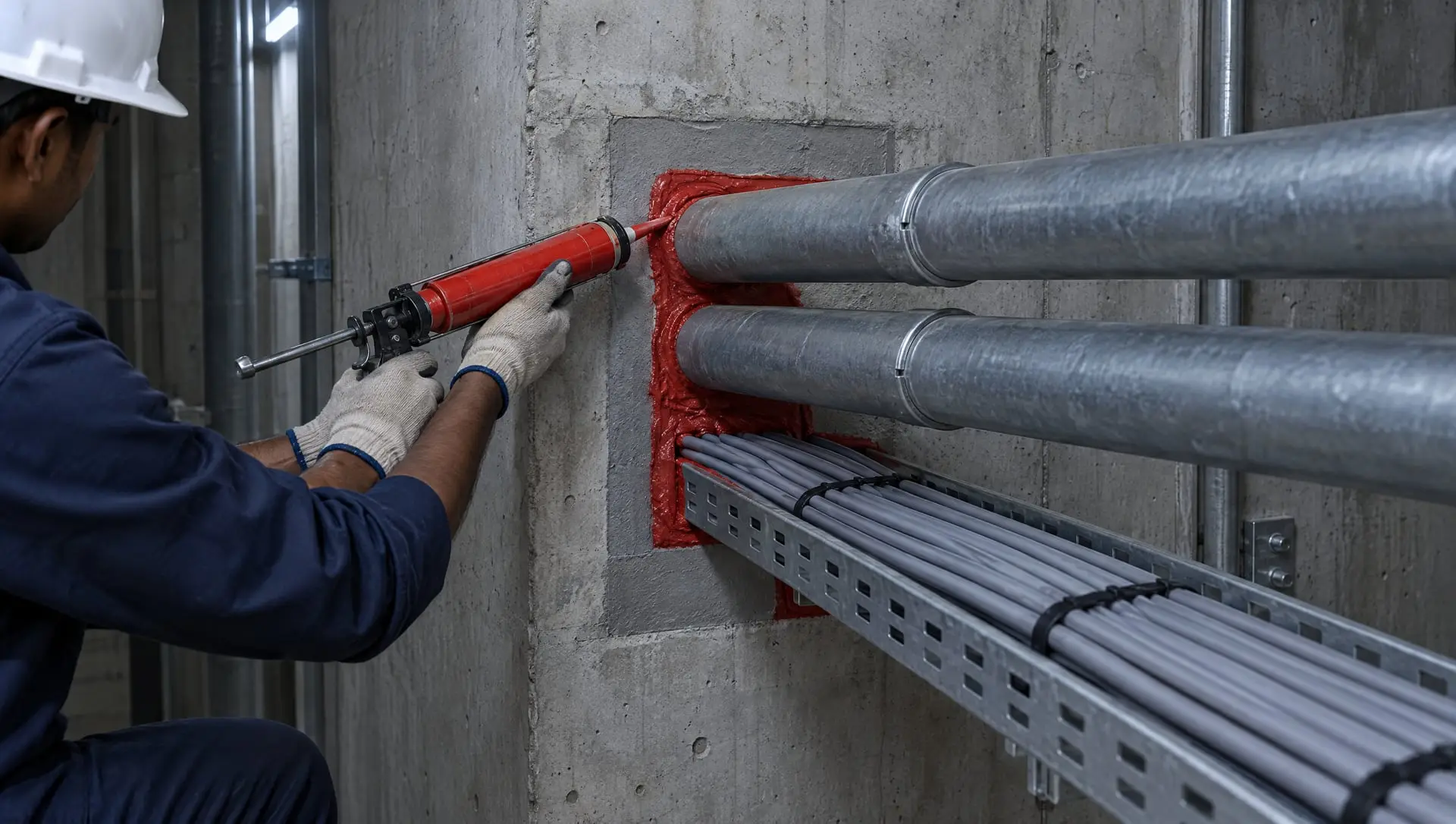
Passive Fire Protection in Mumbai
Cease Fire & Electrical Services LLP provides passive fire protection in Mumbai: fire-stop sealants, fire-rated foam, fire-stop mortar, pipe wraps, fire-retardant coatings and fire doors that stop fire and smoke spreading through shafts, walls and floors. We supply and install these systems in residential towers, commercial buildings and industrial sites, and as a licensed agency we issue Form A for fire doors. Our recent work includes shaft sealing and fire-rated foam for a G + 22 residential tower in Borivali West.
What is passive fire protection?
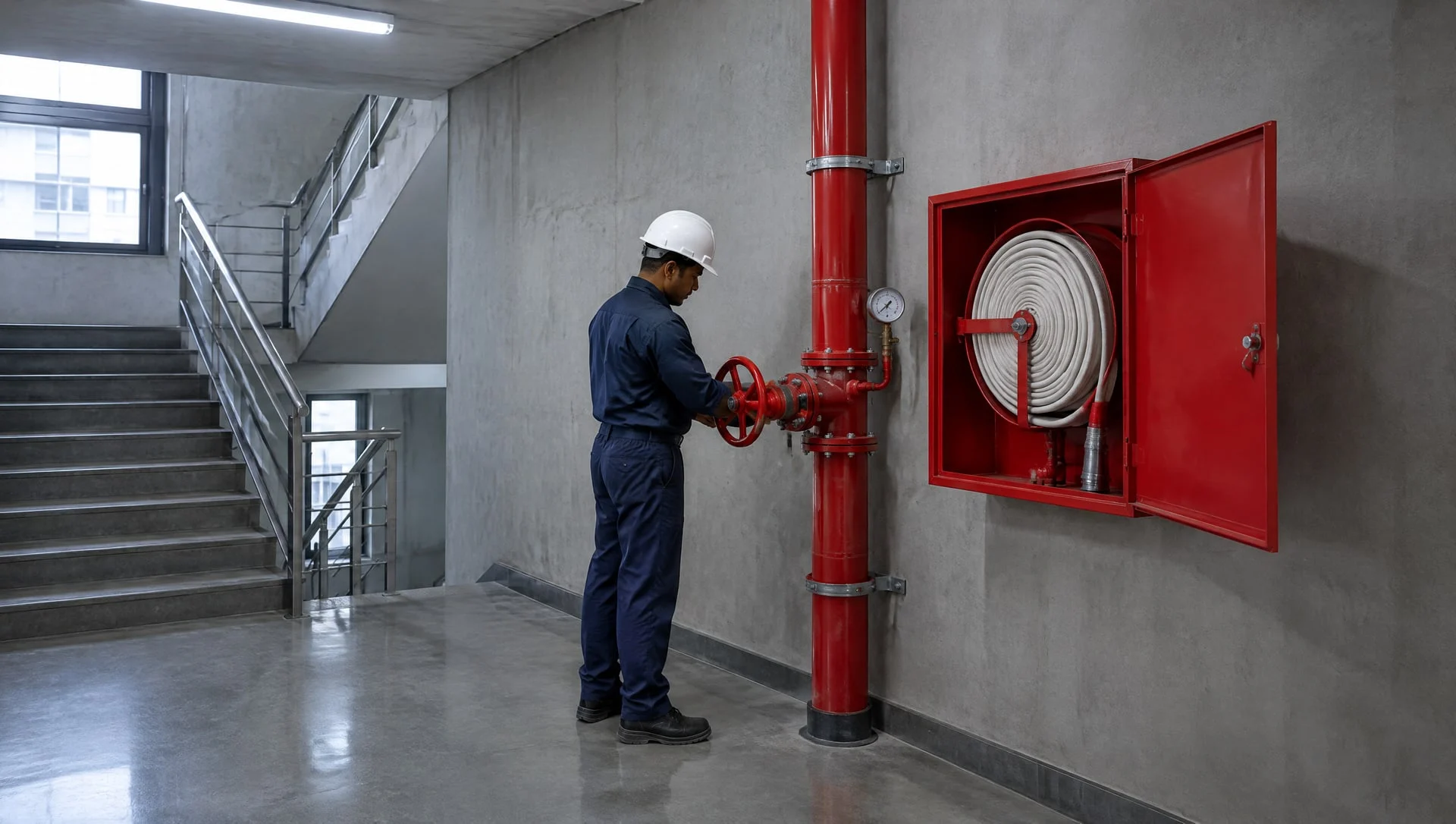
Passive fire protection is the part of fire safety built into the structure. Fire-rated walls, floors, doors and sealed openings divide a building into compartments, so a fire and its smoke stay in one area long enough for people to escape and for firefighters to act. Active systems such as sprinklers and alarms respond to a fire; passive protection works all the time without power or water.
Where fire stopping is needed
Fire stopping is checked at inspection, so we photograph and record every sealed opening at handover. See the Prime Smile case study for a G + 22 tower where we sealed the shafts and issued Form A for the fire doors.
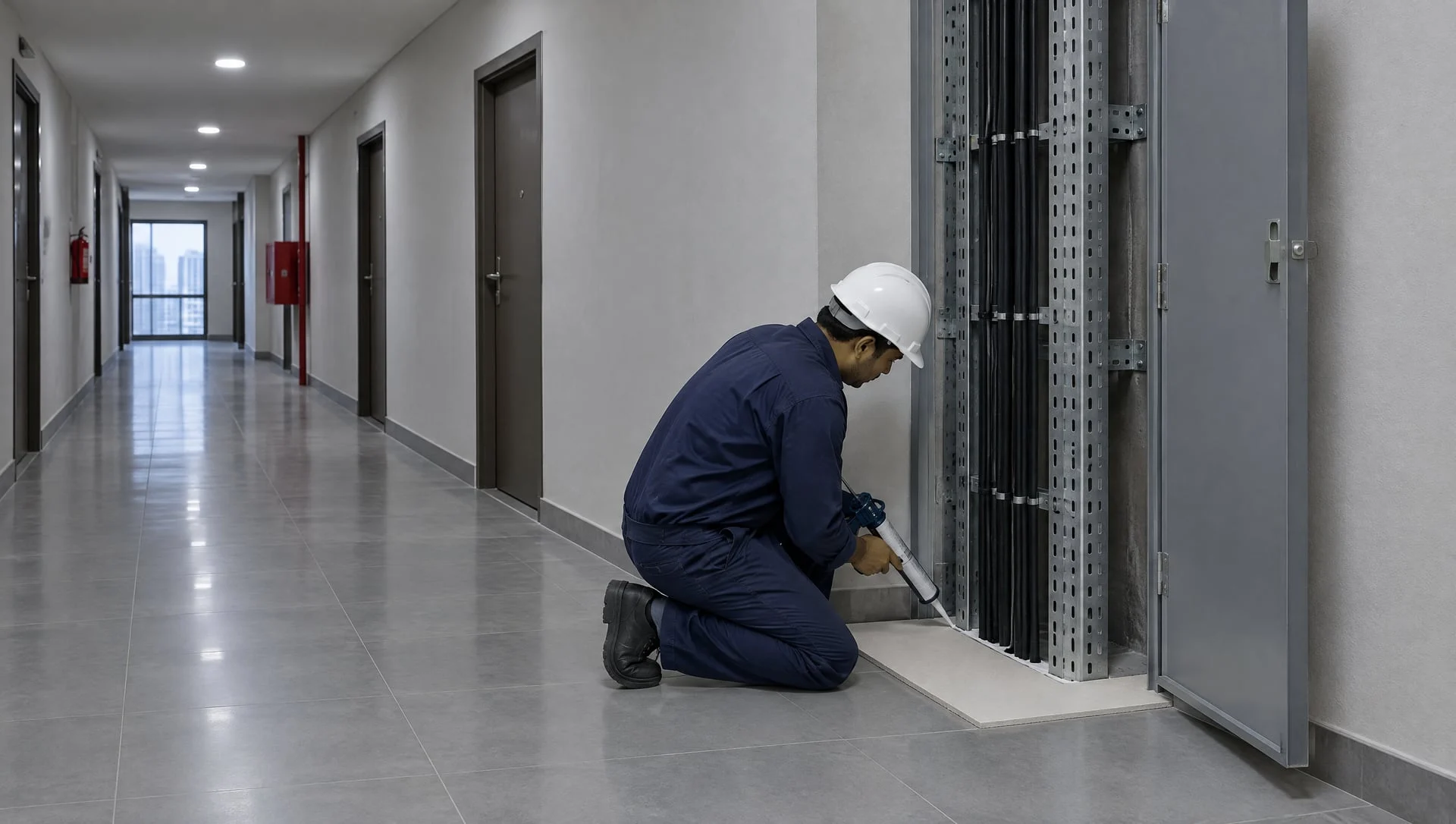
- Every time a pipe, cable, duct or shaft passes through a fire-rated wall or floor, it leaves a gap that fire and smoke can use. Typical places we seal are:
- Electrical, plumbing and service shafts at every floor
- Cable trays and bunches passing through walls and floors
- Plastic and insulated pipes through slabs
- Gaps around ducts and at wall and floor joints
- Openings left after new services are added during fit-outs
Passive fire protection systems we install
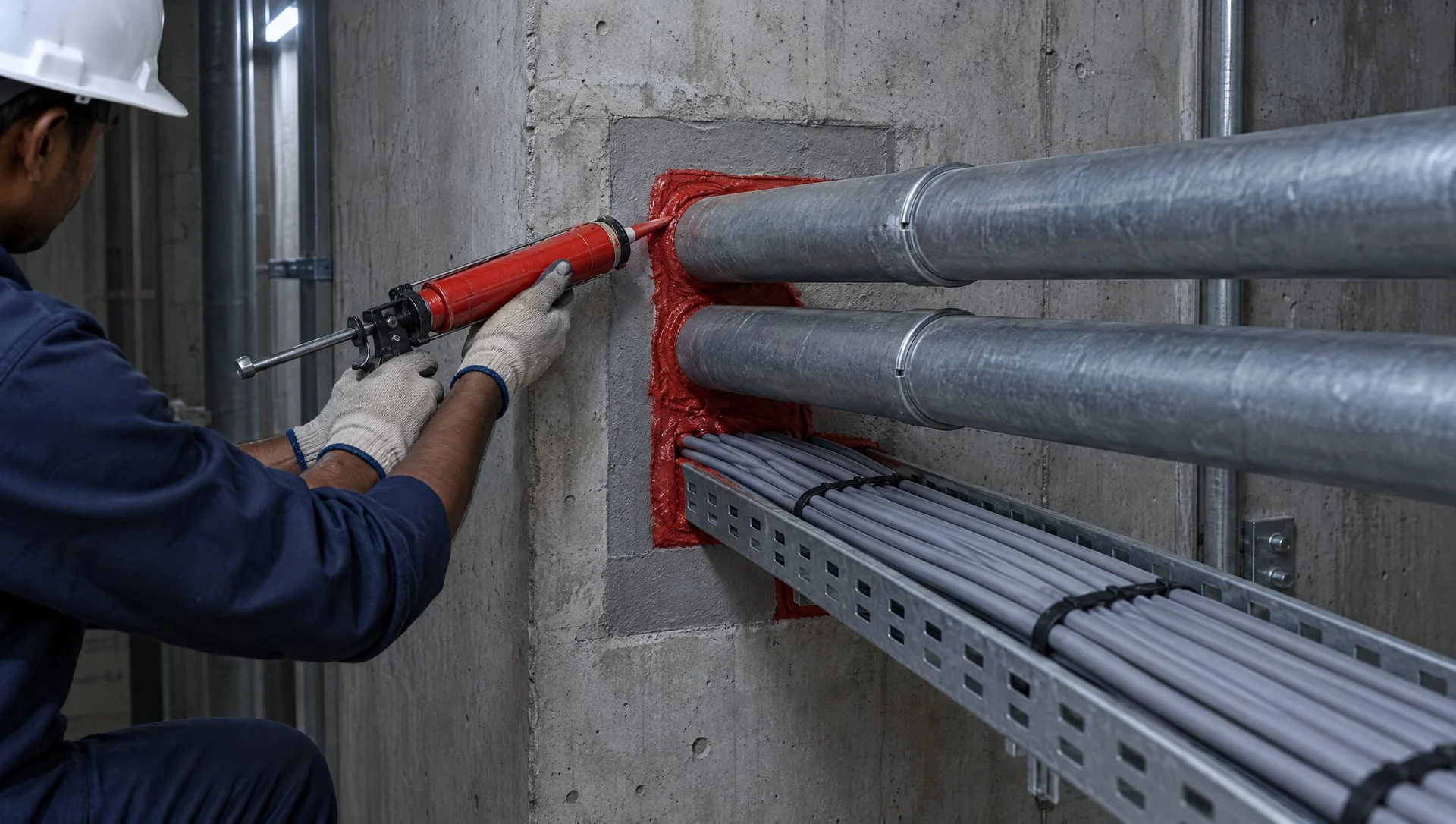
Fire-stop sealants and fire-rated foam
What it doesFill and seal gaps around pipes, cables and joints
Where it is usedService penetrations, small openings and joints
Fire-stop mortar
What it doesForms a solid, load-bearing seal across a shaft opening
Where it is usedService shafts at each floor
Pipe wraps
What it doesClose off plastic and insulated pipes as they soften in a fire
Where it is usedPlastic and insulated pipes through slabs and walls
Fire-resistant putty cord
What it doesSeals small gaps around services
Where it is usedCable and pipe penetrations
Fire-retardant coatings and paint
What it doesSlow the spread of flame on cables, services, walls and ceilings
Where it is usedCable trays, service routes, walls and ceilings
Fire boards
What it doesBuild fire-rated enclosures and partitions
Where it is usedDucts, shafts and partitions
Fire doors
What it doesKeep fire and smoke out of staircases, lobbies and service rooms
Where it is usedStair cores, lift lobbies, electrical and meter rooms
How we seal a shaft with fire-stop mortar
Rebar
8 mm or 10 mm rebar with crossbars, depending on the shaft size, gives the seal its strength.
Wire mesh
A 0.5 mm wire mesh over the rebar forms a base.
Rockwool
Packed around every pipe and cable to stop leaks when the mortar is poured and to add insulation.
Pipe wrap
Fitted around plastic pipes and pipes with combustible insulation, with the number of turns set by pipe size.
Mortar
Mixed to the right consistency and pressed into every corner and around every service to the required depth, with no trapped air.
Smaller gaps around services are sealed with fire-stop sealant, fire-rated foam or putty cord.
Fire doors and Form A
Fire doors protect escape routes, so the fire brigade checks them. In Mumbai, the fire NOC document list asks for a Form A certificate from a licensed agency for fire-resistant doors installed in the premises. As a Maharashtra Fire Services Licensed Agency, we supply and install fire doors and issue Form A for them.
Our process
Free site survey
We inspect shafts, penetrations and doors, and list every opening to be sealed.
Proposal
The right system for each opening, with quantities.
Supply and installation
Fire-stopping, coatings, boards and doors, installed by our own team.
Inspection and handover
Each sealed opening is checked and recorded, with photos.
Form A
We issue Form A for fire doors and the fire protection work we complete.
Ongoing checks
Openings made later by other trades are the most common failure, so we can re-inspect under AMC.
Passive fire protection project
Prime Smile, Borivali West (G + 22 residential tower), 2024–25: supply and installation of fire sealant for the service shafts, fire-rated foam, and Form A for the fire doors.
See all projects and case studies.
Why choose Cease Fire
Since 1992
1,500+ projects and the Rashtriya Nirman Ratna Award for Best Government Contractor (2002).
Licensed
Maharashtra Fire Services Licensed Agency (MFS/
LA/ ), so we issue Form A for fire doors.RF-93/ RD-95 Complete range
Sealants, foam, mortar, pipe wraps, coatings, boards and doors from one team.
Audit experience
Our fire safety audits check compartmentation and fire doors, so we know what inspectors look for.
Book a free site survey
Tell us your building type, number of floors and what needs sealing, and send photos if you have them. We will inspect the openings and send a clear proposal.
Frequently asked questions
What is passive fire protection?
Passive fire protection is the fire-rated walls, floors, doors and sealed openings that keep fire and smoke in one part of a building. It works without power or water, unlike sprinklers and alarms.
What is the difference between active and passive fire protection?
Active fire protection, such as sprinklers, alarms and extinguishers, detects or fights a fire. Passive fire protection contains the fire by keeping walls, floors and openings fire-resistant.
Why do service shafts need fire sealing?
Unsealed shafts act like chimneys, carrying fire and smoke from floor to floor. Sealing the shaft at each floor keeps the fire in the floor where it started.
What is fire-stop mortar used for?
Fire-stop mortar seals larger openings, such as service shafts, with a solid, load-bearing layer around the pipes and cables passing through.
Do fire doors need a Form A certificate?
In Mumbai, the fire NOC document list asks for a Form A from a licensed agency for fire-resistant doors installed in the premises. We supply and install fire doors and issue Form A.
Can fire stopping be added to an existing building?
Yes. We survey the existing shafts and openings, then seal them floor by floor with minimal disruption to residents or occupants.
What materials are used to seal a fire shaft?
We use rebar, wire mesh, rockwool, pipe wraps and fire-stop mortar across the opening, with fire sealant, fire-rated foam or putty cord for smaller gaps. The method is chosen for the shaft size and the services passing through.
How do I get a quote for passive fire protection?
Send your shaft sizes, photos or drawings to sales@ceasefireservices.com, call +91 9920676281, or book a free site survey.
Question not answered here? Call our team, Monday to Saturday, 9 am to 7 pm.
Call +91 9920676281