
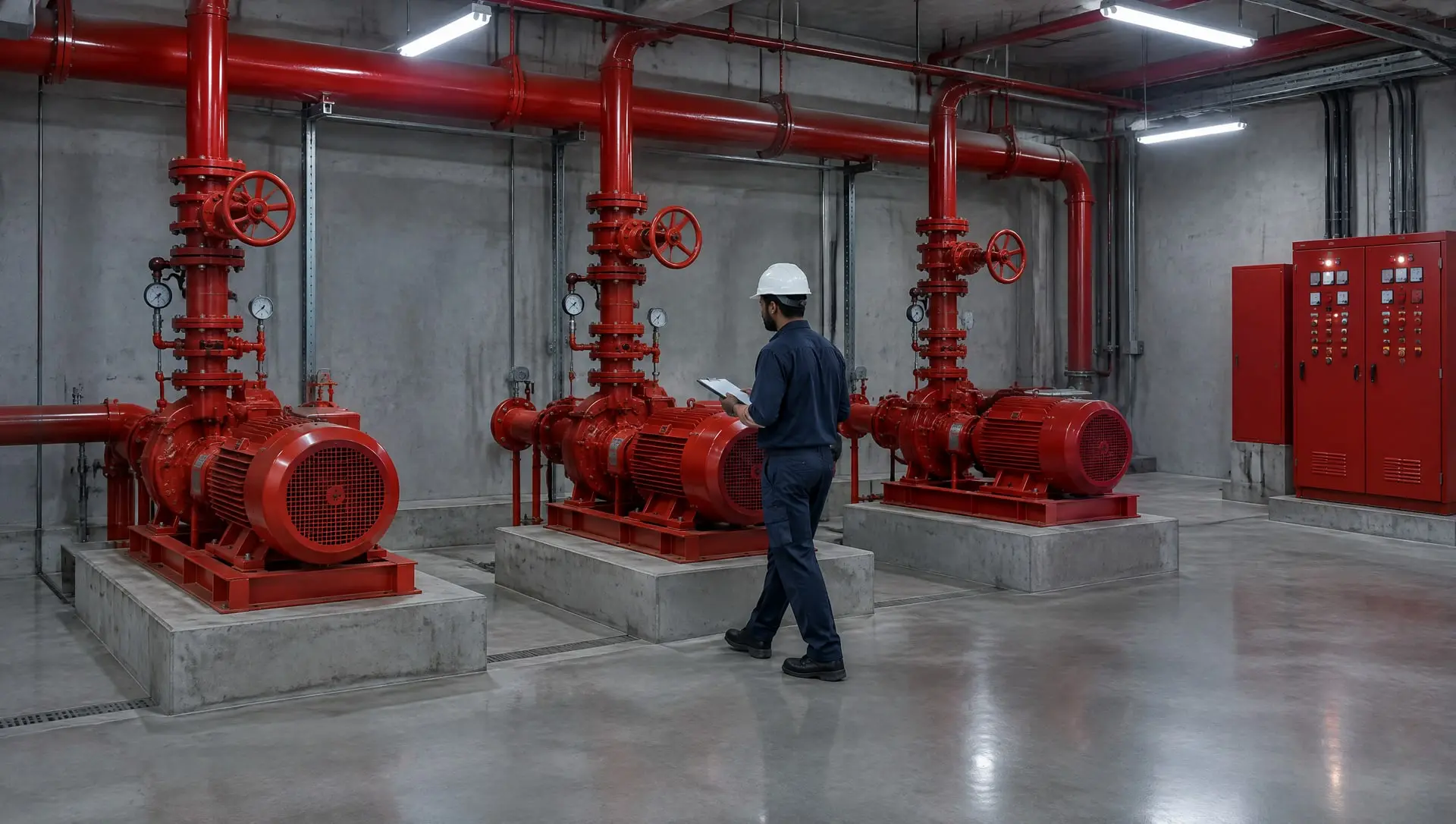
Fire IoT Monitoring System (ACMS) in Mumbai
Cease Fire & Electrical Services LLP supplies, installs, tests and commissions the FireSense IoT panel, our own fire IoT monitoring system, for buildings in Mumbai and across Maharashtra. The panel reads the status of your fire pumps, water tanks, line pressure, fire alarm panel and pump power every minute and sends it to a cloud dashboard, with alerts to the owner or occupier and the licensed agency. It supports the Automated Continuous Monitoring System (ACMS) that Maharashtra's fire rules of 12 June 2025 require for covered buildings.
What the FireSense IoT panel monitors
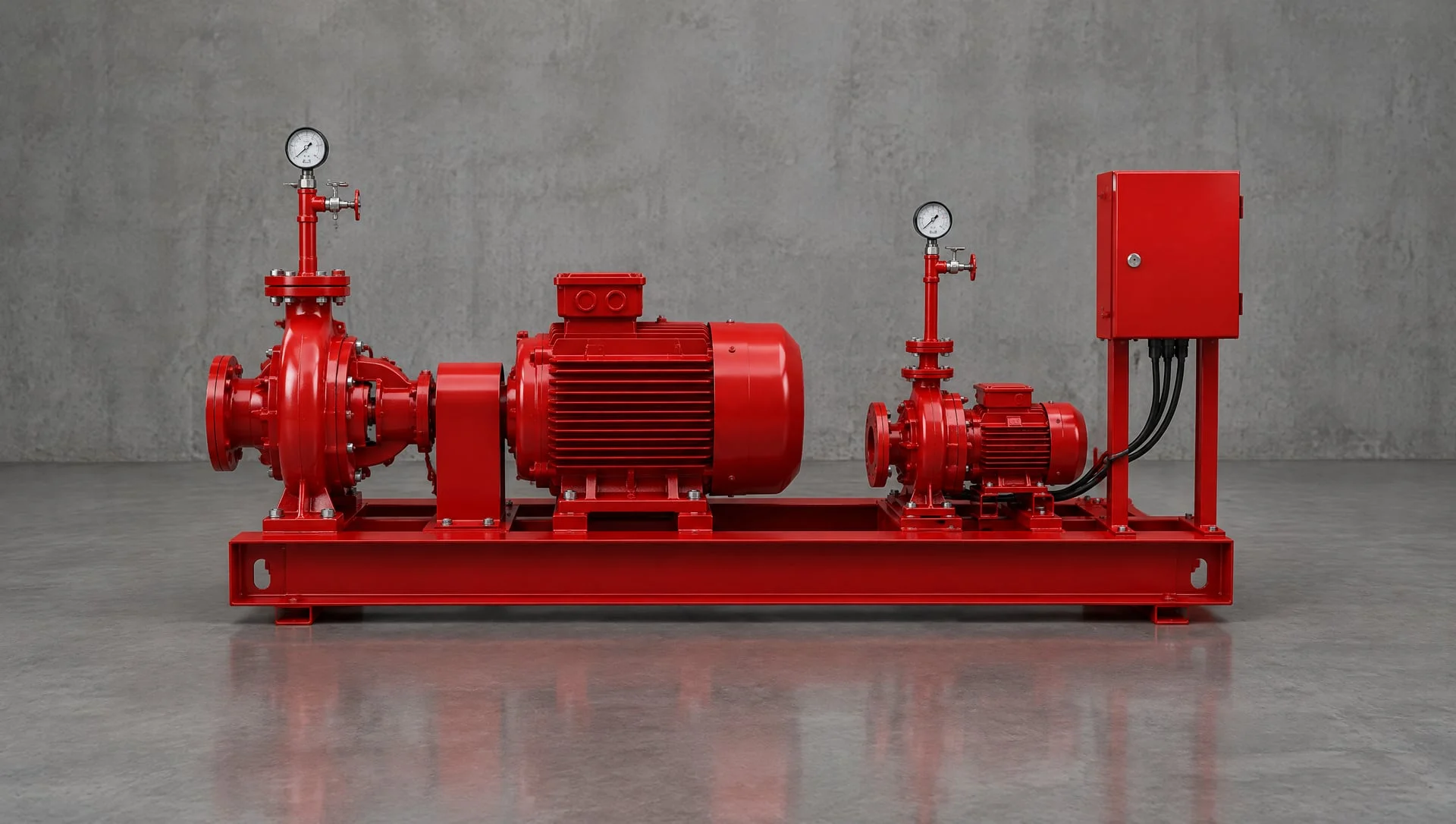
- Fire pumps
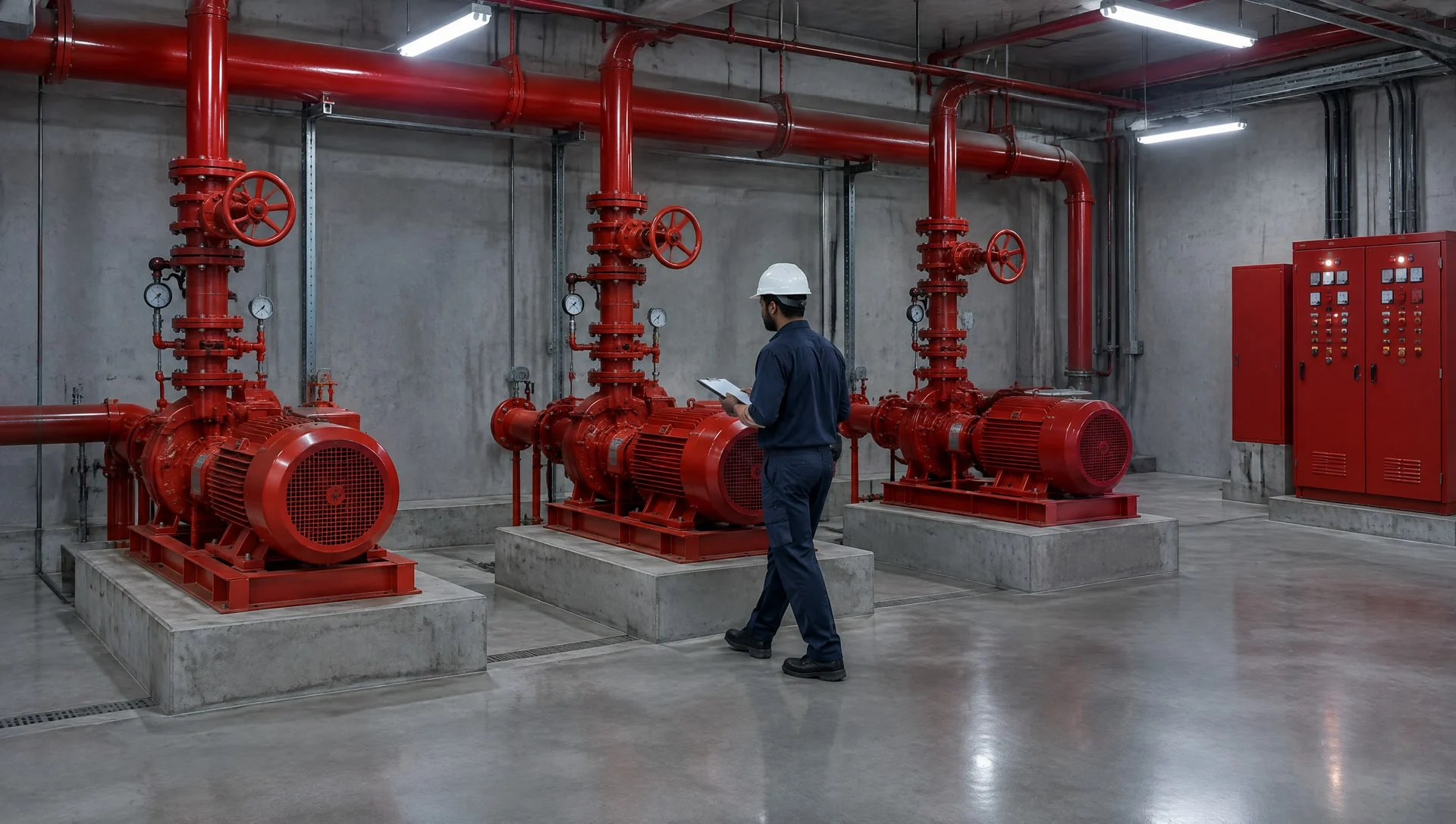
- Status of the main, jockey and diesel pumps, so a pump left in manual mode or not running is noticed
- Fire MCC panel power
- Energy, current, voltage and frequency, with efficiency reports
- Water tanks
- Tank levels through water level probes, with low-level alerts
- Line pressure
- Hydrant, sprinkler and drencher line pressure through pressure sensors
- Fire alarm panel
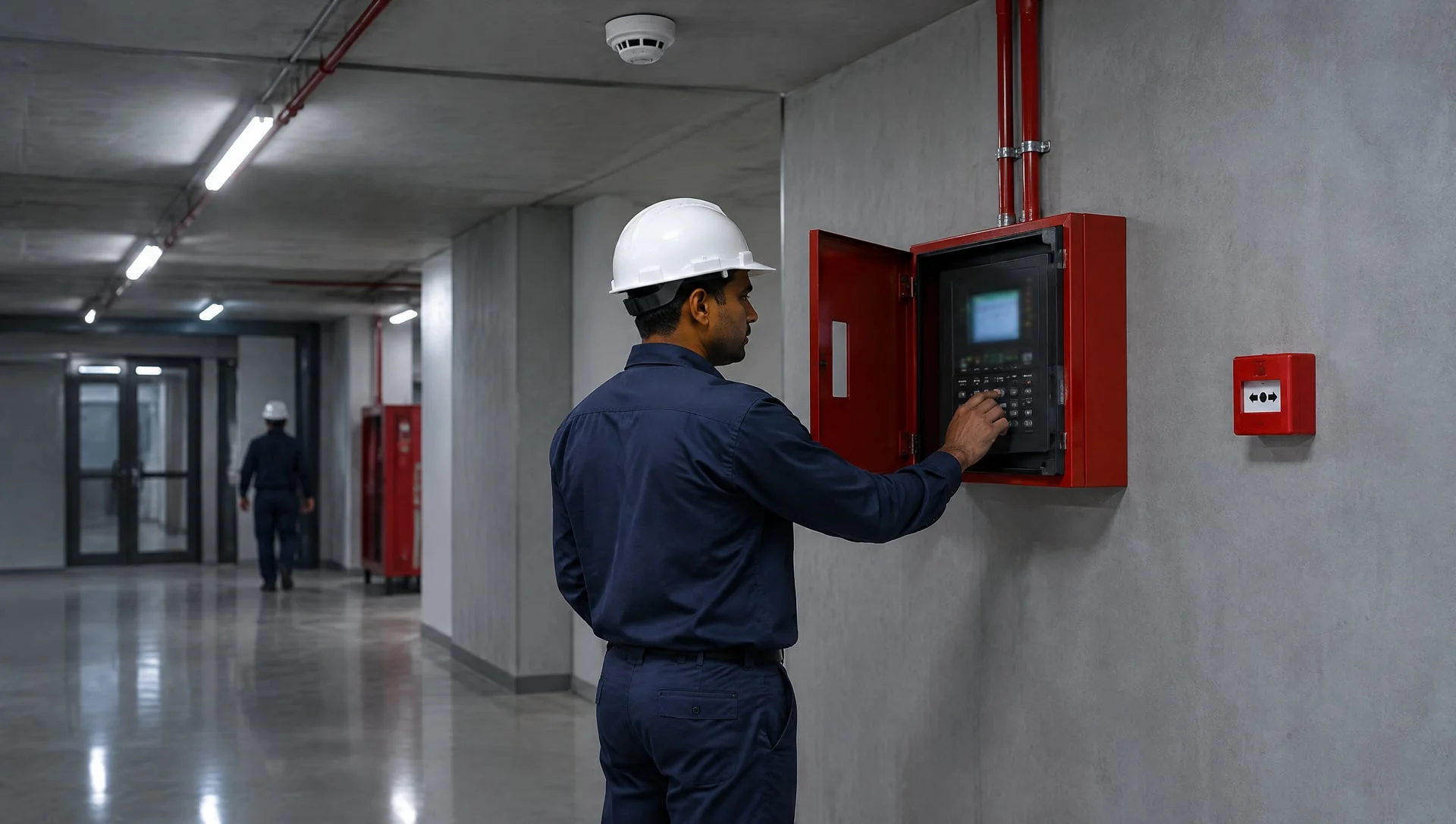
- Fire alarm panel status and health, in real time
- Connectivity
- Data over SIM card, Wi-Fi or LAN port to a secure cloud server
How it works
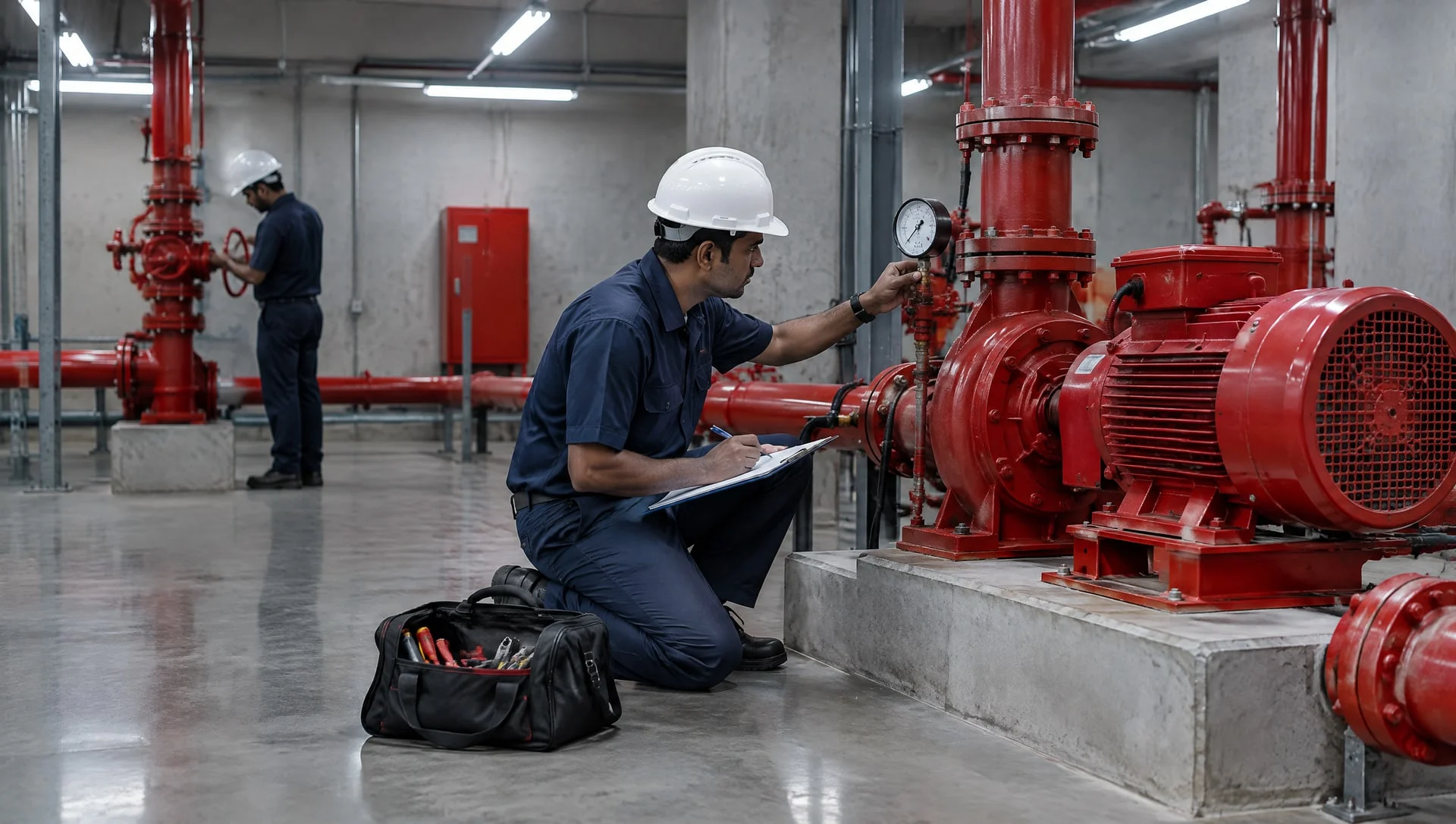
The panel is wired to your pumps, tanks, pressure points and panels, and reads them continuously.
It sends data to the cloud server every minute over SIM, Wi-Fi or LAN.
If no data arrives for 15 minutes, it sends an SMS, so a dead device is noticed.
The owner or occupier and the licensed agency get alerts and notifications.
A dashboard shows live data, historical reports and performance metrics from any device.
FireSense IoT and ACMS
Maharashtra's amendment rules of 12 June 2025 require covered buildings to monitor their fire protection measures with IoT devices around the clock. A licensed agency certifies the monitoring on Form A-1, and the owner files Form B-1 in January and July. In Phase I, alerts go to the owner or occupier and the licensed agency. Phase II, planned for later, sends critical alarms to the fire services.
The specification calls for data over a secure connection every minute, an alert if data stops, a gateway that keeps running in a power cut, and a store of event logs. The FireSense panel follows this approach. Read the full explanation in our ACMS guide.
Panel specification
- Power supply
- 100 to 240 V AC
- Operating temperature
- -20 °C to 60 °C
- Connectivity
- SIM card, Wi-Fi, LAN port
- Cloud
- Secure cloud server with dashboard and reports
- Compatibility
- Connects to existing fire safety systems
Where it is used
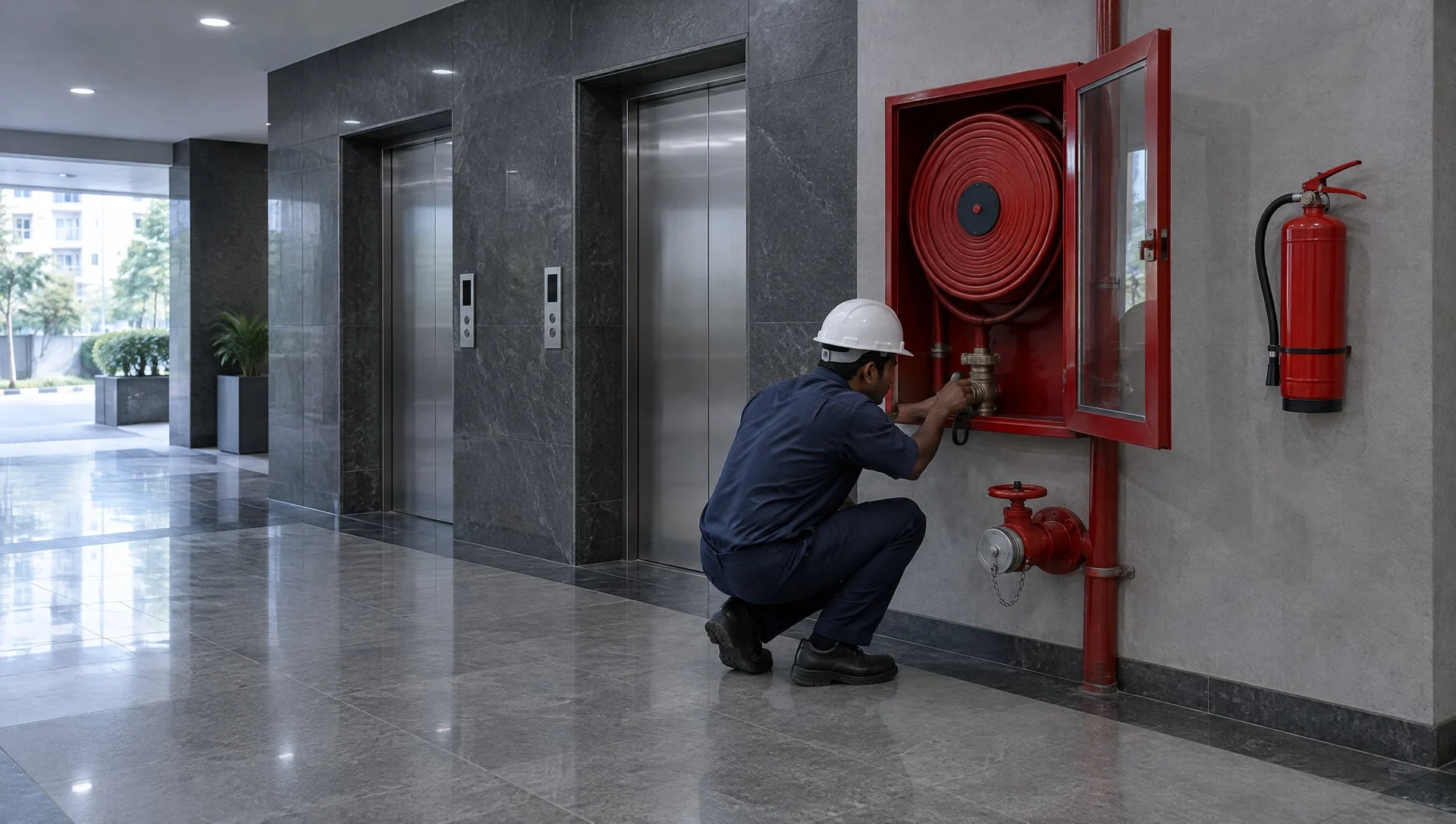
Residential towers and housing societies
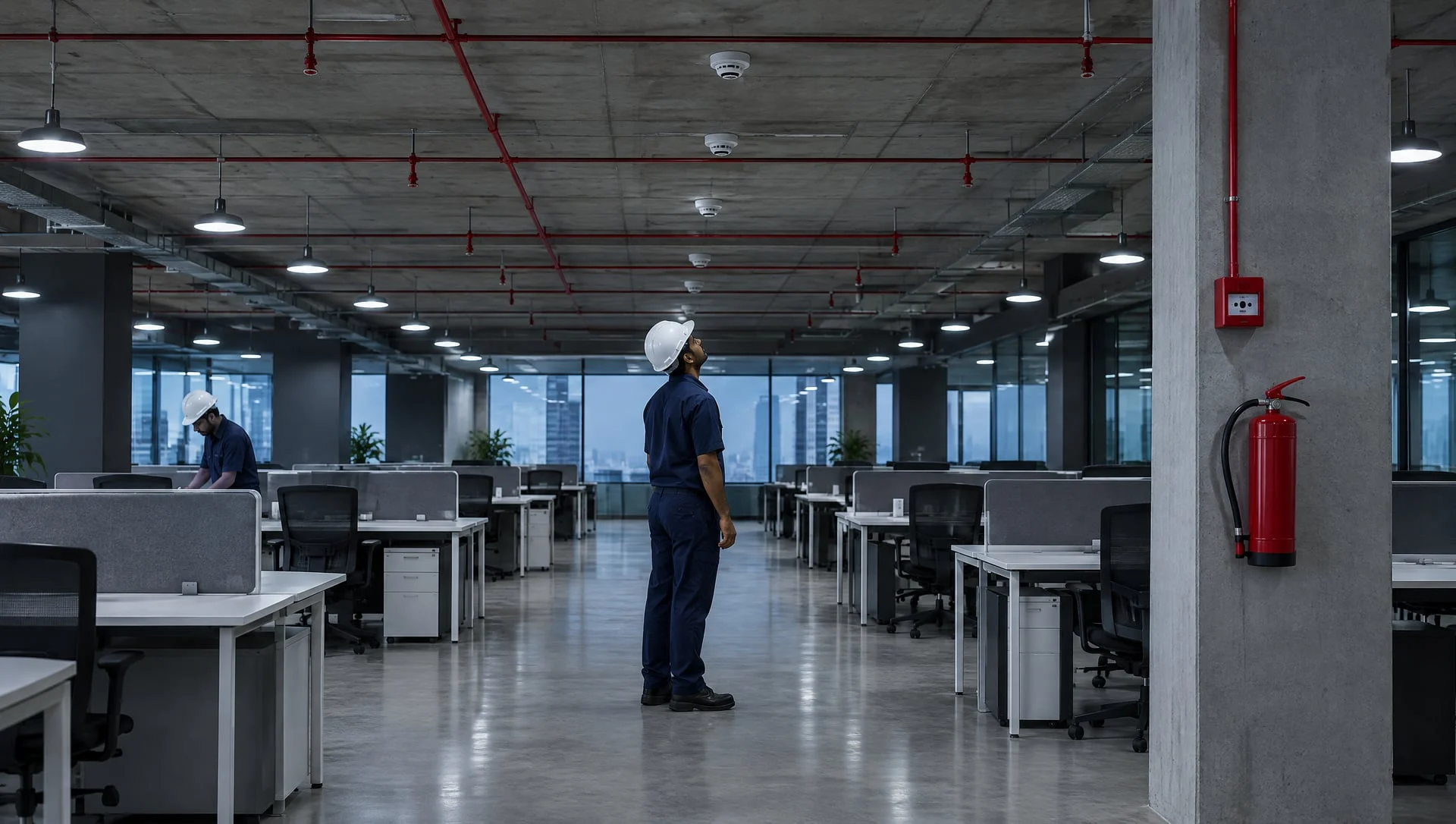
Commercial buildings, offices and malls
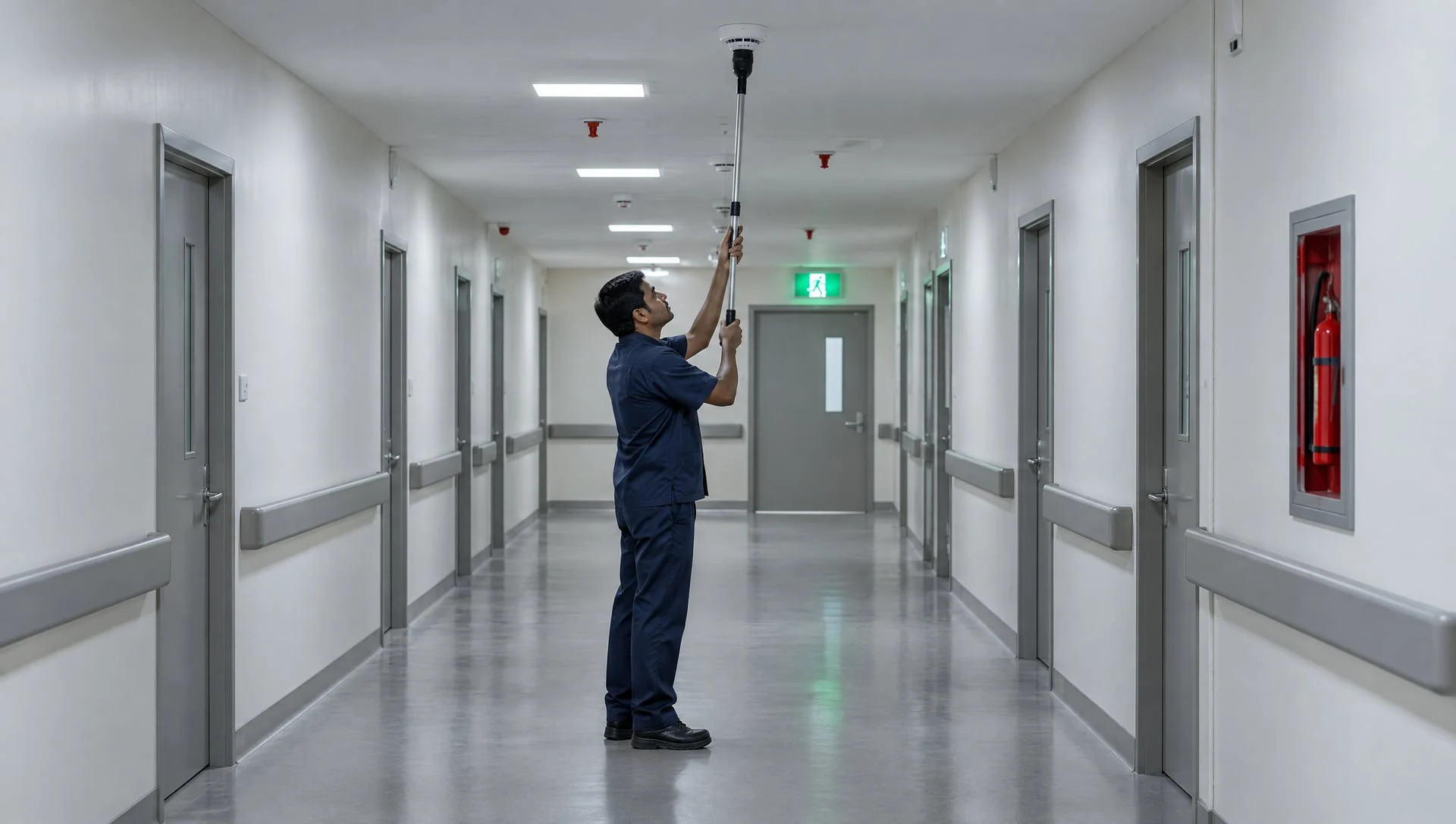
Hospitals, hotels and schools

Factories, warehouses and industrial plants
What to tell us
- Building
- Type, height and location
- Pumps
- Main, jockey and diesel pumps, and the pump panel
- Tanks
- Underground and terrace tanks to be monitored
- Pressure points
- Hydrant and sprinkler lines, and sprinkler risers
- Fire alarm
- Make and model of the fire alarm panel
- Existing system
- New building, or an existing building to be connected
Supply, installation and servicing
We survey the building first and list the pumps, tanks, pressure points and panels to connect. We then supply, install, test and commission the panel with its sensors, probes, relays, SIM and cloud access, so the building needs no internet link of its own. The panel connects to what is already installed, so no new fire system is needed. Because we also run AMC, the same team can act on what the monitoring shows.
On a real project
In July 2025, Neo Smile Developers in Borivali West ordered a FireSense IoT panel from us for monitoring fire pumps, tank levels, line pressure and pump power. See the Neo Smile case study.
Why choose Cease Fire
Since 1992
A Maharashtra Fire Services Licensed Agency (MFS/
LA/ ) with 1,500+ projects.RF-93/ RD-95 Our own product
FireSense is made by us, so supply, commissioning and support come from one team.
Fire systems and monitoring together
We install and maintain the systems being monitored.
Book a free site survey
Tell us about your building and we will survey it, list the connection points and give you a written scope. The site survey is free.
Frequently asked questions
What is a fire IoT monitoring system?
It is a panel with sensors that reads the status of a building's fire pumps, tanks, line pressure and fire alarm panel and sends it to a cloud dashboard. It alerts people when something is wrong.
What is ACMS in Maharashtra?
ACMS is the Automated Continuous Monitoring System required for covered buildings under the fire rules amended on 12 June 2025. It monitors fire protection measures around the clock with IoT devices.
What does the FireSense IoT panel monitor?
It monitors fire pump status, fire MCC panel energy, current, voltage and frequency, tank levels, hydrant, sprinkler and drencher line pressure, and the fire alarm panel.
Does my building need its own internet connection?
No. The panel can connect over SIM card, Wi-Fi or LAN, and the SIM and cloud access come with it.
What happens if the panel loses connection?
The panel normally sends data every minute. If none arrives for 15 minutes, it sends an SMS alert.
Can it be added to an existing building?
Yes. It connects to the pumps, tanks and pressure points already in the building, so no new fire system is needed. We survey first to list the connection points.
Who receives the alerts?
In Phase I of ACMS, alerts go to the owner or occupier and to the licensed agency. Phase II, planned for later, sends critical alarms to the fire services.
Do I still need Form B-1 if I install the panel?
Yes. The owner files Form B-1 in January and July, and a licensed agency certifies the monitoring on Form A-1. They are separate from Form A and Form B for the fire systems.
Question not answered here? Call our team, Monday to Saturday, 9 am to 7 pm.
Call +91 9920676281