Fire Suppression System Installation in Mumbai
Cease Fire & Electrical Services LLP provides fire suppression system installation in Mumbai for server rooms, electrical panels, control rooms, commercial kitchens and other areas where water would cause damage. We design and install FM-200, FK-5-1-12 (Novec 1230), inert gas, CO2, kitchen wet chemical and tube-based systems, calculating the agent quantity for each room. As a Maharashtra Fire Services Licensed Agency, we test, commission and maintain every system we install.
What is a fire suppression system?
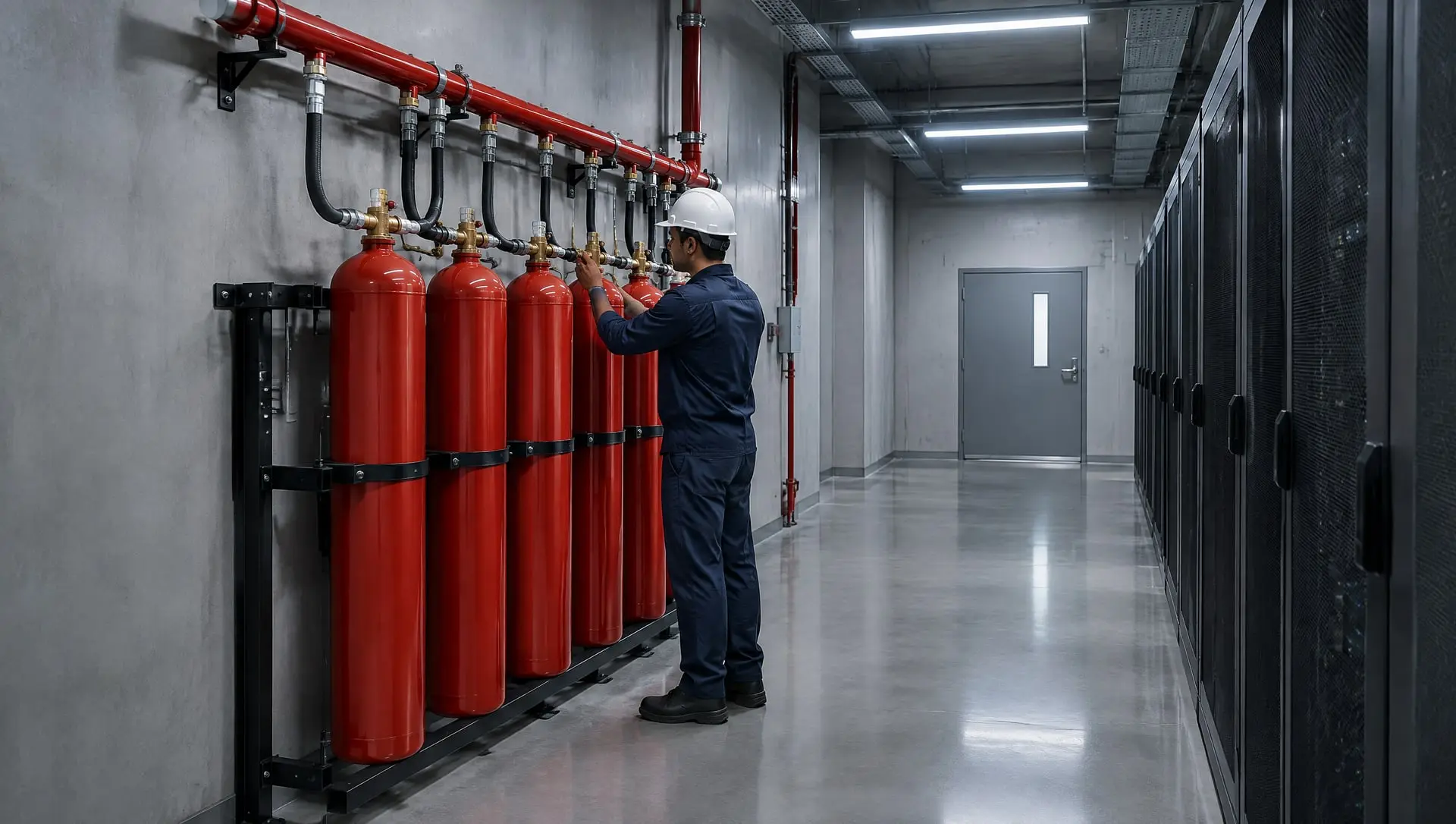
A fire suppression system puts out a fire in a closed room or piece of equipment by releasing a gas or chemical agent instead of water. Detectors sense the fire, a releasing panel sounds a warning and then opens the agent cylinders, and nozzles fill the room or hazard with the agent. It protects equipment and records that sprinklers or extinguishers would damage, and it works within seconds, even when nobody is present.
Types of fire suppression systems
FM-200 (HFC-227ea)
How it worksClean agent gas that absorbs heat and stops the fire; leaves no residue
Typical useServer rooms, data centres, control rooms and archives
FK-5-1-12 (Novec 1230)
How it worksClean agent stored as a liquid that turns to gas on discharge; leaves no residue
Typical useServer rooms, data centres and valuable equipment rooms
Inert gas
How it worksNatural gases such as argon and nitrogen that lower the oxygen level below what a fire needs
Typical useLarge computer and control rooms where a residue-free, natural agent is preferred
CO2 flooding
How it worksCarbon dioxide that smothers the fire; not safe for occupied rooms
Typical useUnoccupied electrical rooms, panels, DG rooms and machinery spaces
Kitchen wet chemical
How it worksNozzles over the hood and appliances release a wet chemical agent and cut off the gas supply
Typical useHotel, restaurant and industrial kitchens
Tube-based (direct and indirect)
How it worksA heat-sensitive tube bursts at the fire and releases agent inside the enclosure
Typical useElectrical panels, server racks, CNC machines and small enclosures
3M stopped making its Novec 1230 fluid, but the same agent, FK-5-1-12, is still made by other manufacturers, so existing and new systems can continue to be supplied. For the kitchen, we also supply K-class wet chemical extinguishers (2, 4, 6 and 9 litre) for hand-held backup.
Where suppression systems are needed
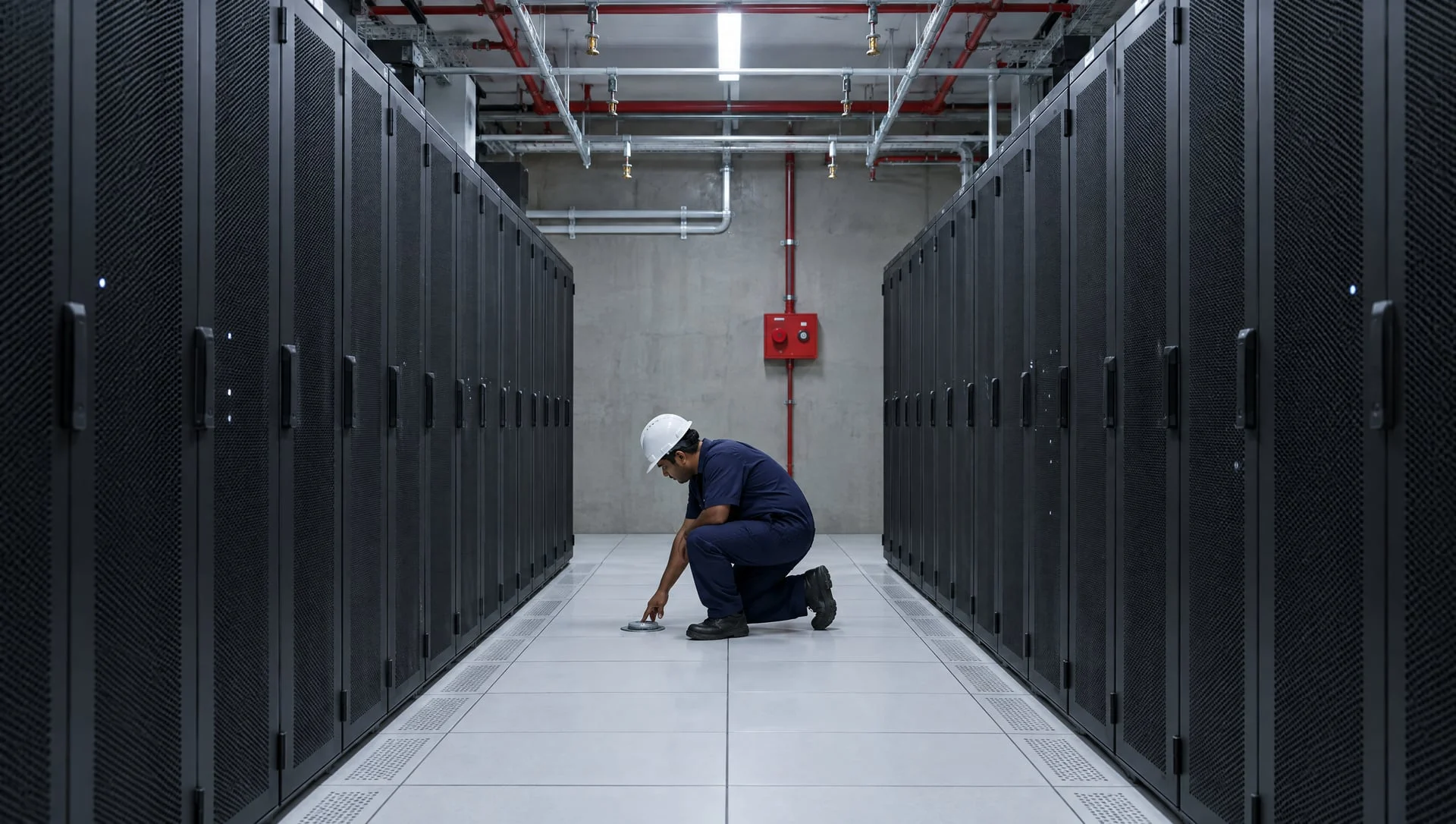
Server rooms, data centres and telecom rooms
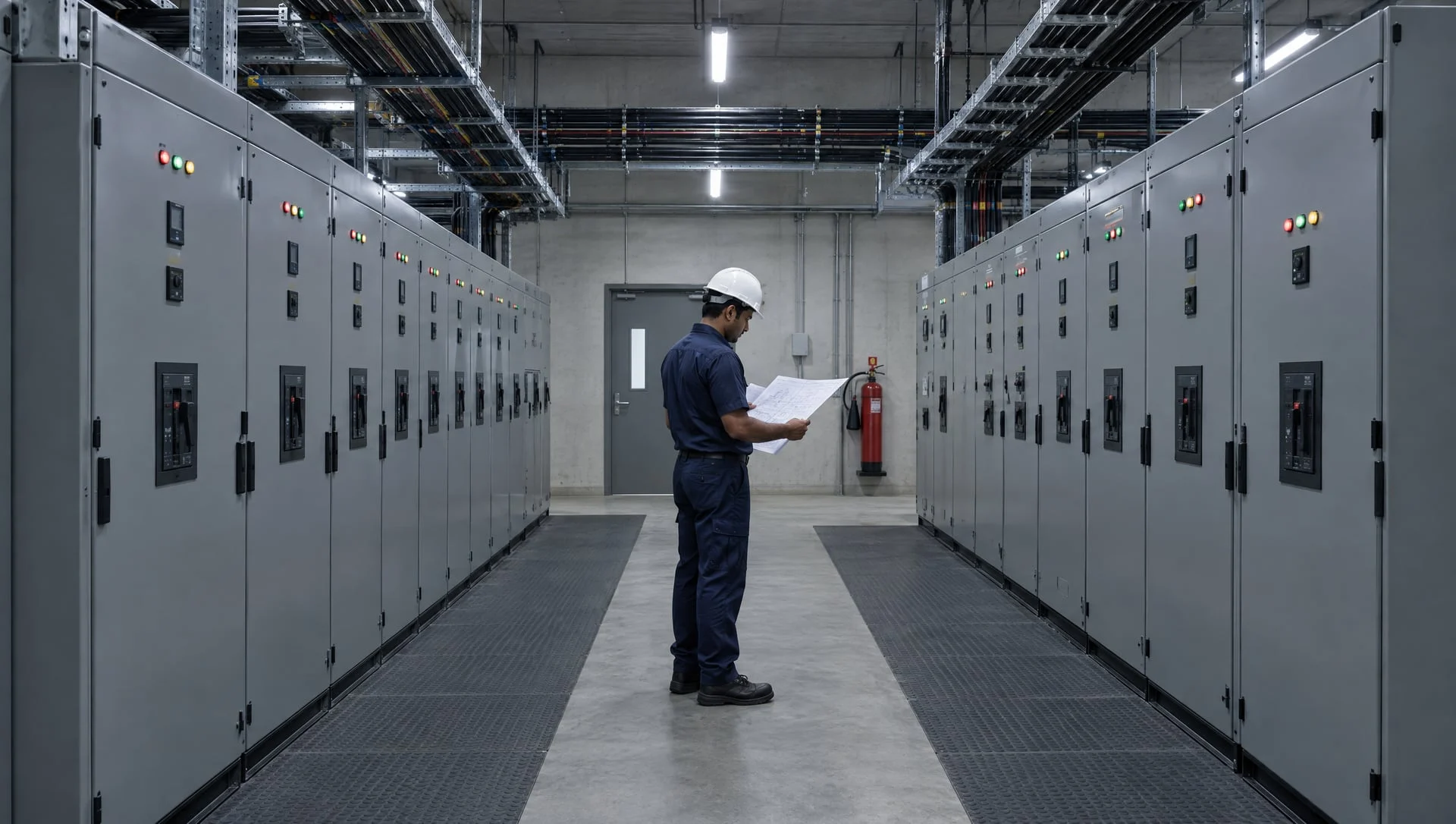
Electrical rooms, panels, transformers and UPS and battery rooms
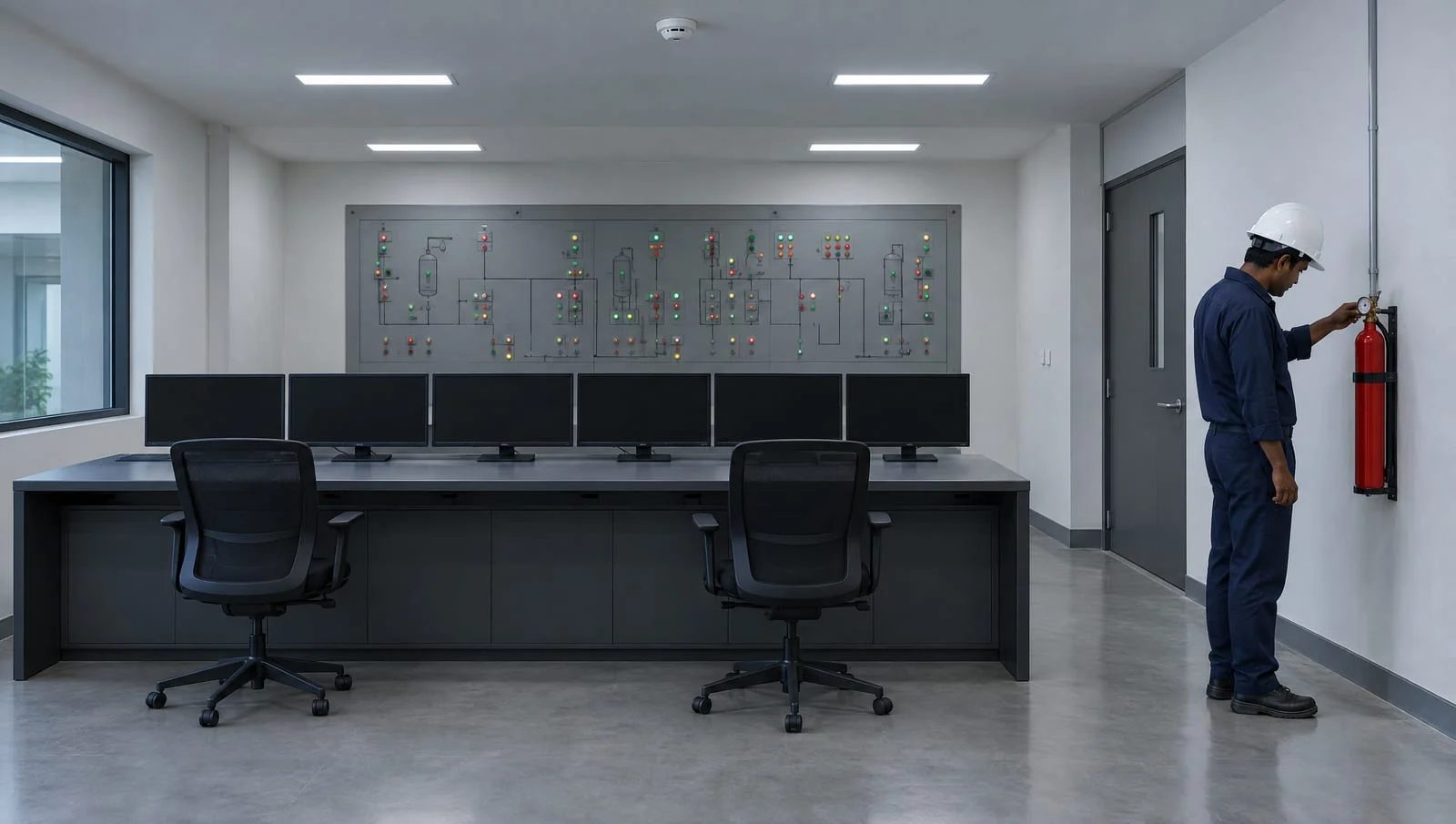
Control rooms, archives and record rooms
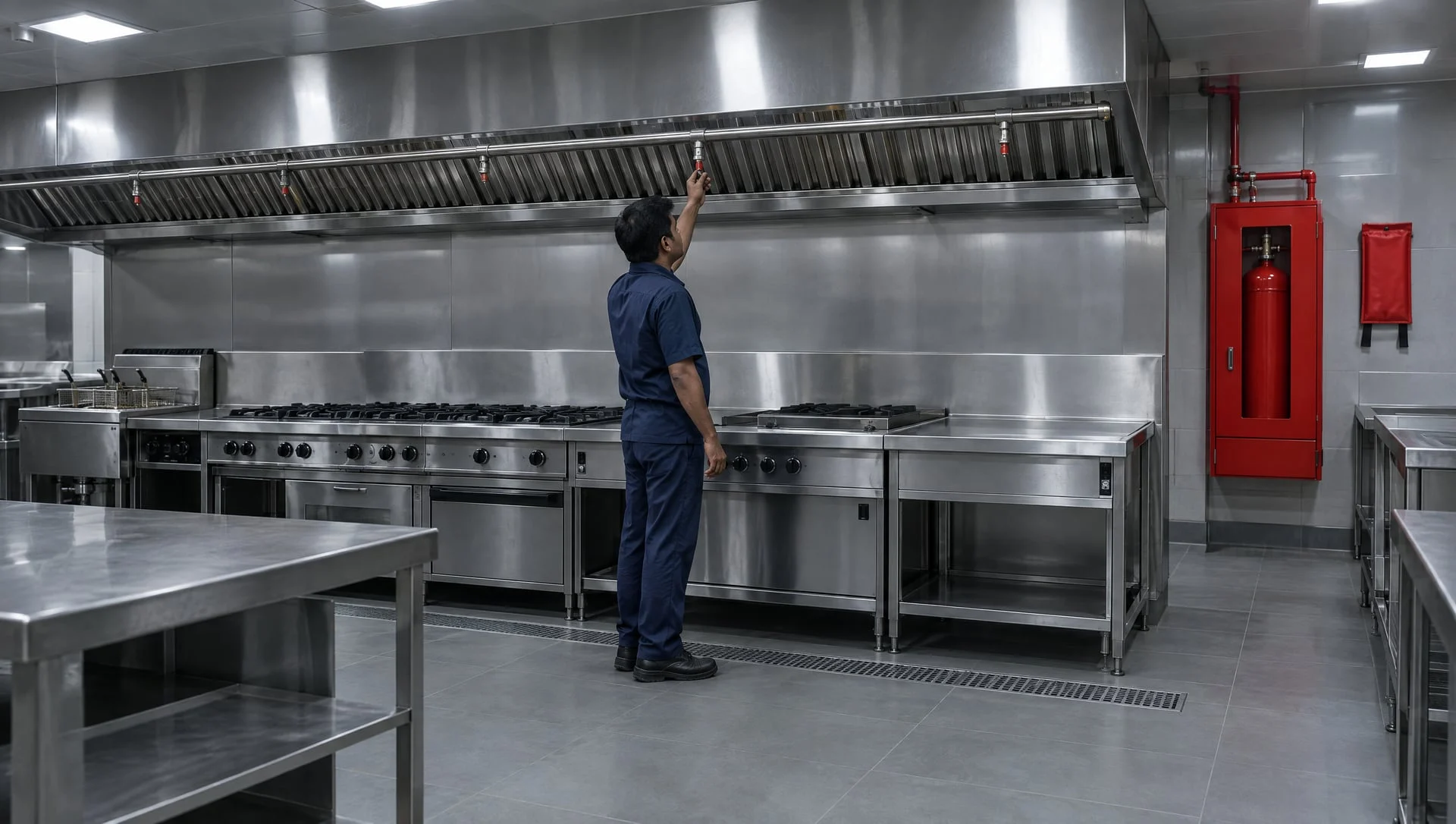
Commercial kitchens in hotels, restaurants, hospitals and factories
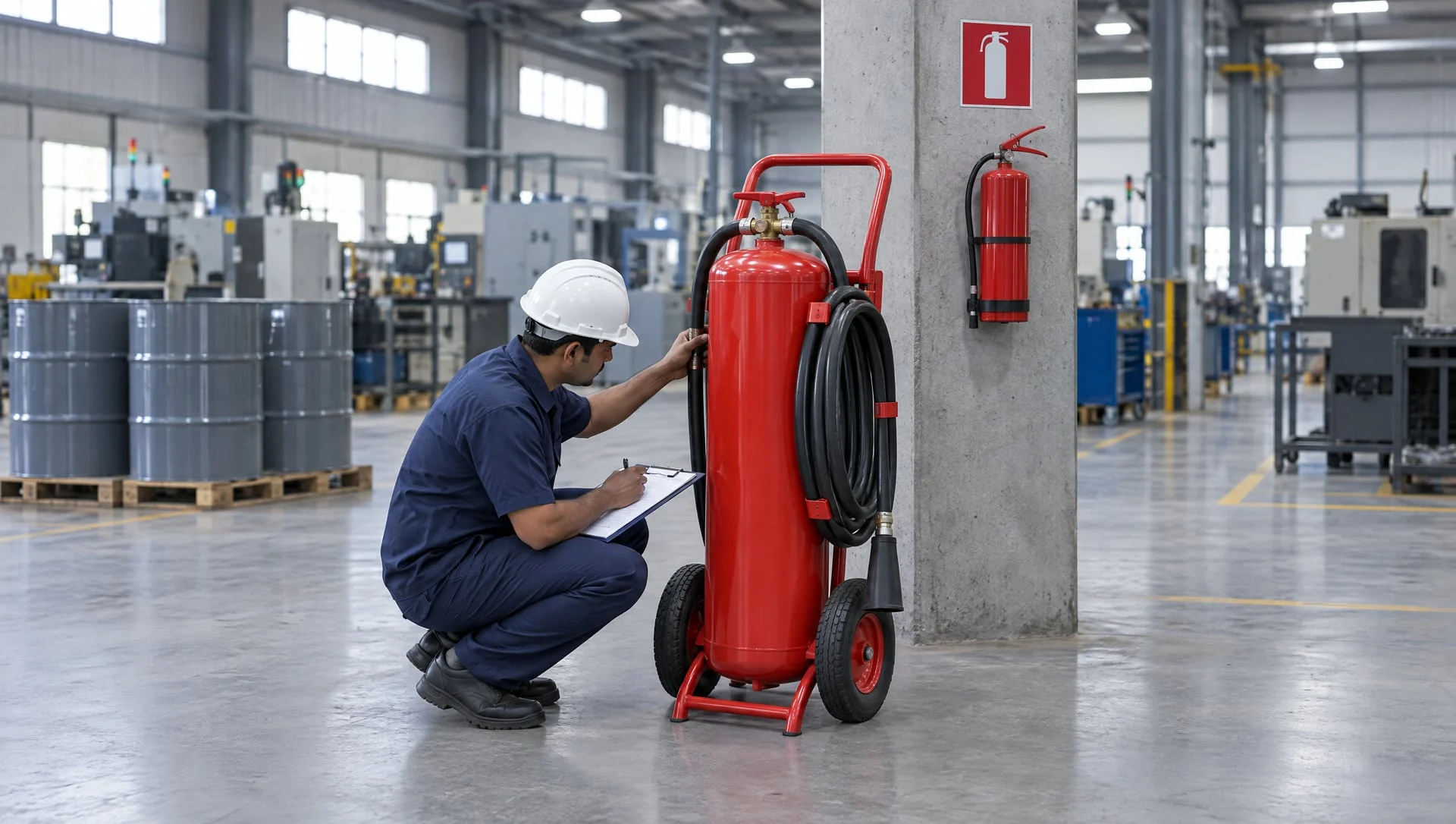
Machinery and process enclosures in factories
Components of a gas suppression system
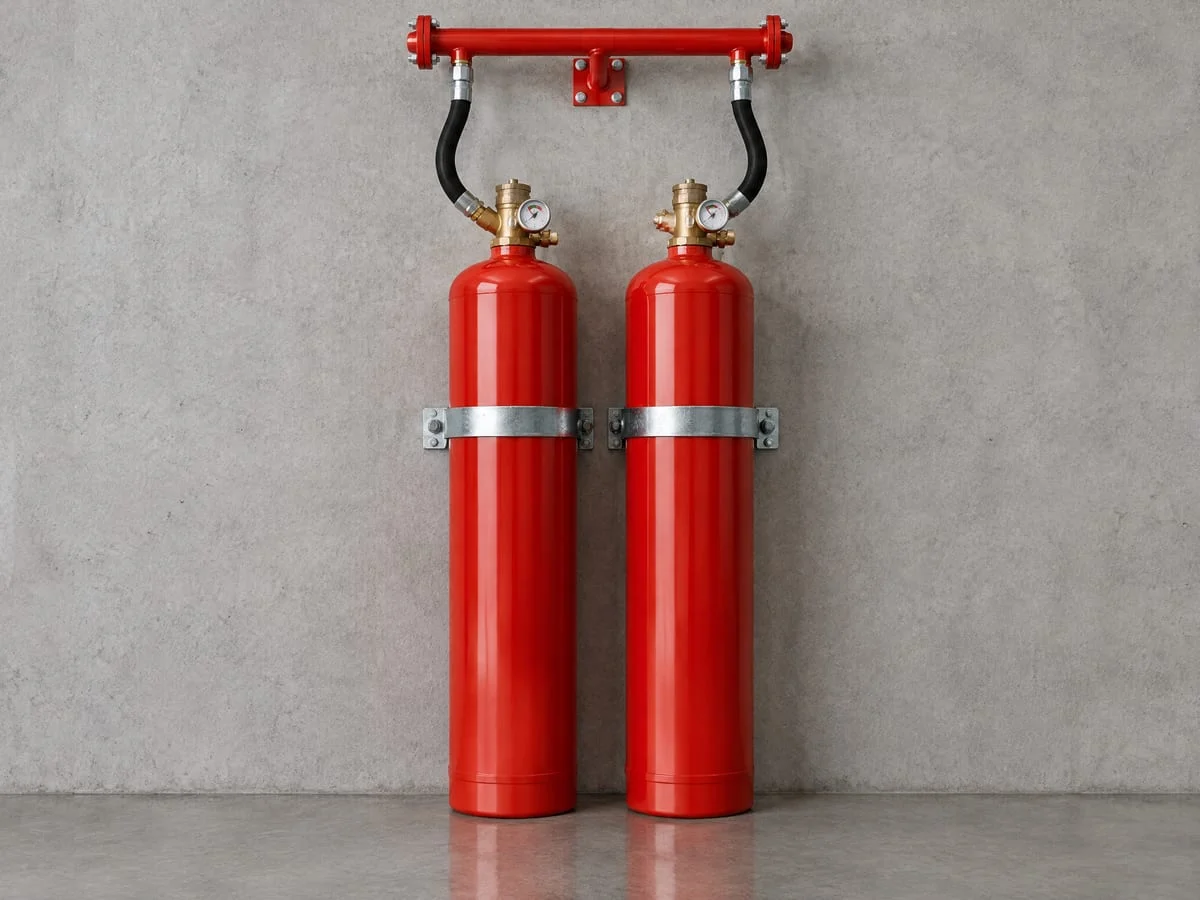
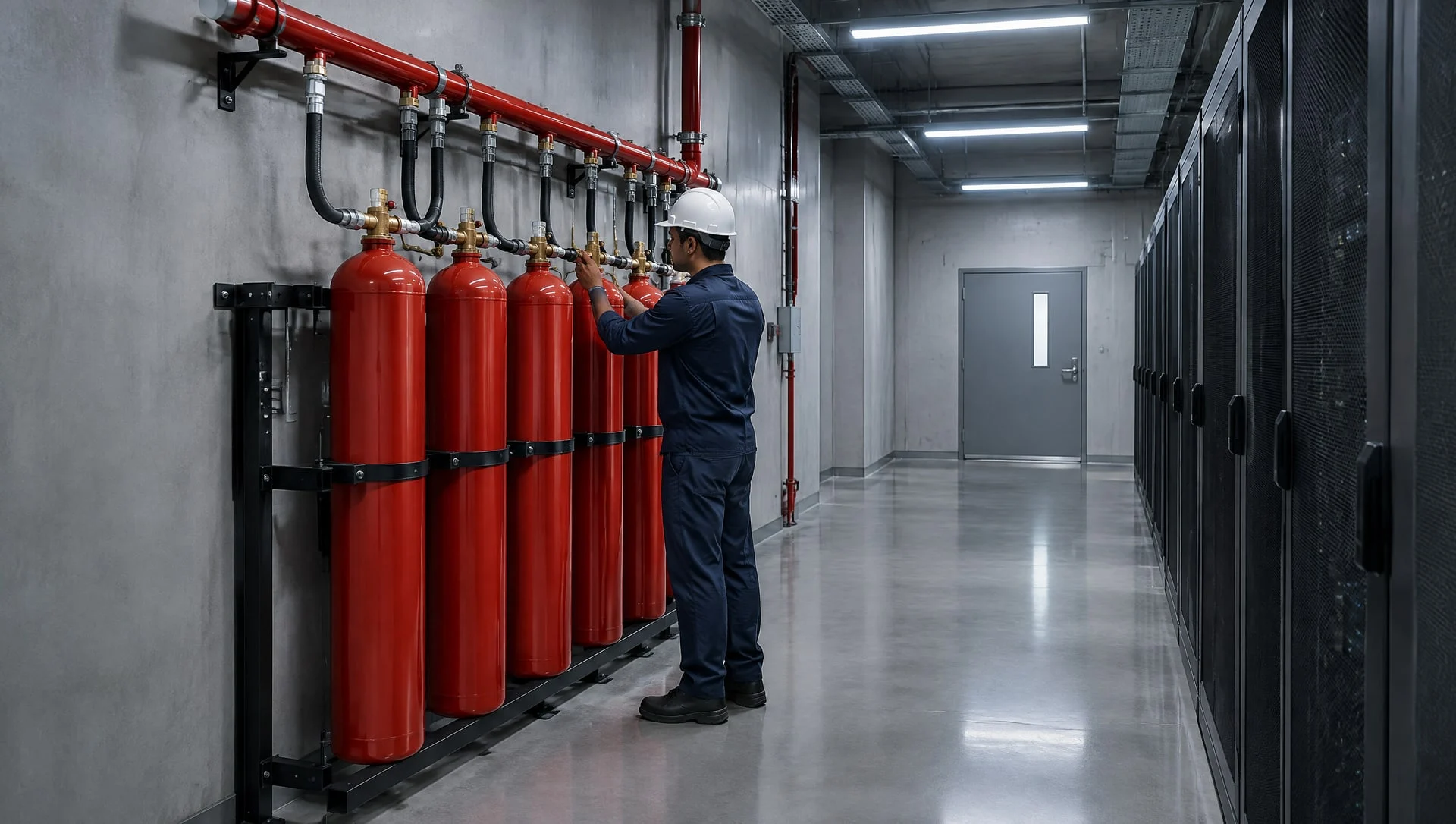
Agent cylinders with valves
Store the agent under pressure until release
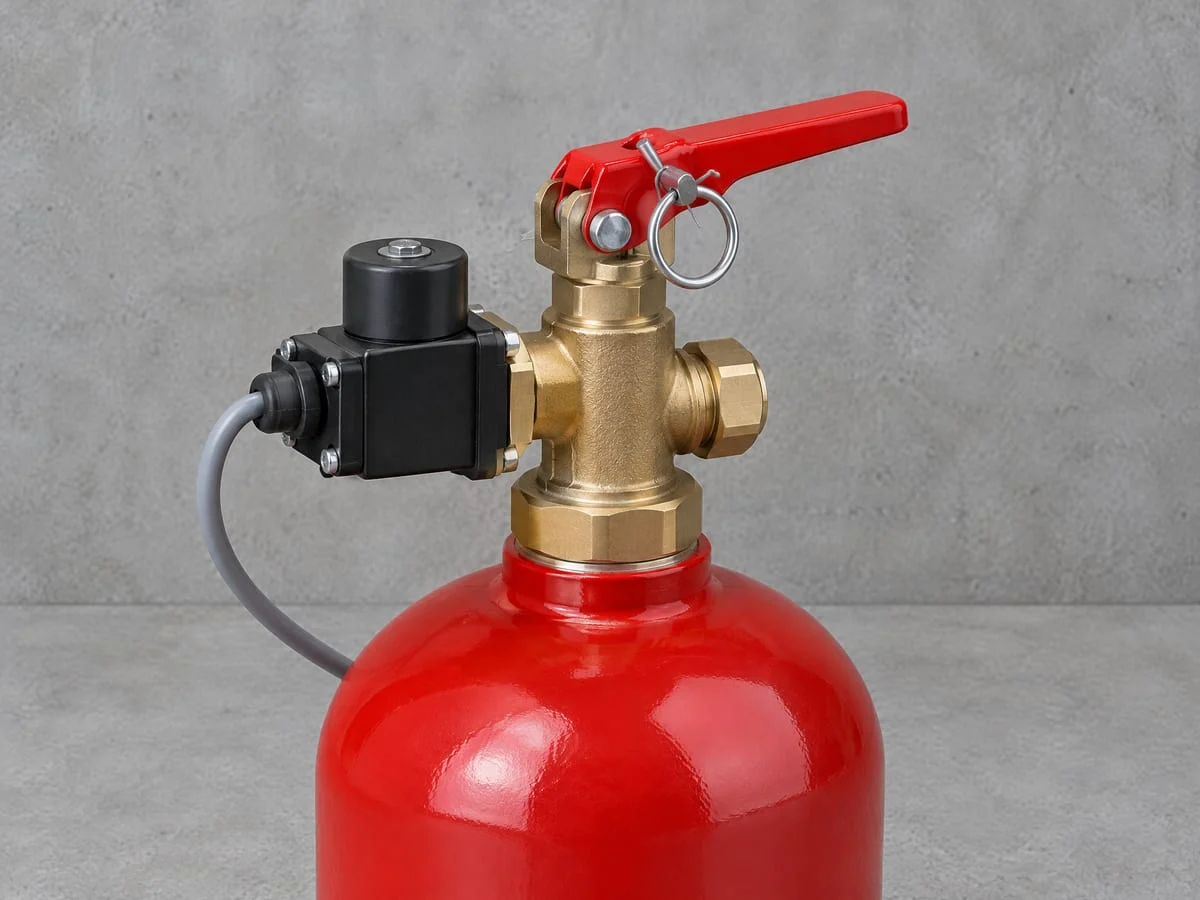
Solenoid and manual actuators
Open the cylinder valve automatically or by hand
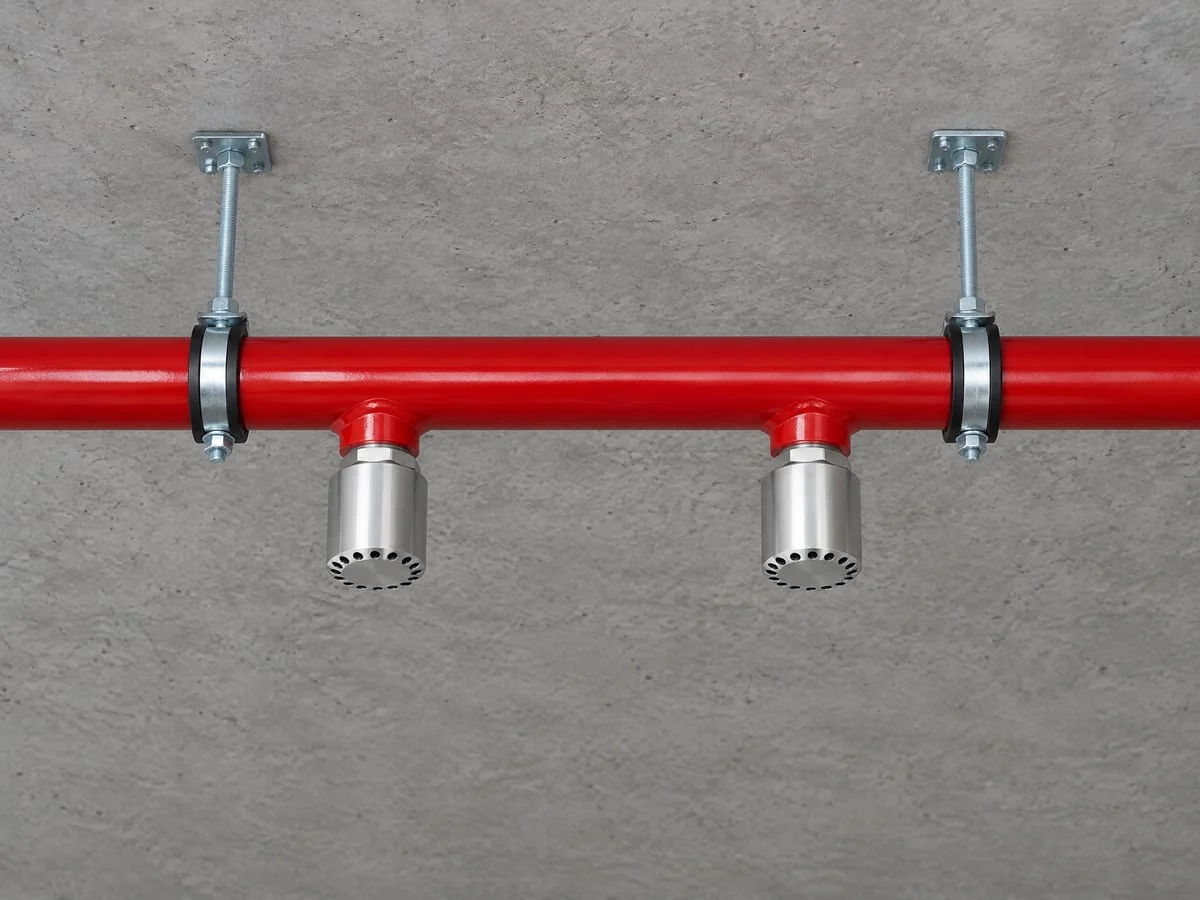
Discharge pipework and nozzles
Spread the agent evenly through the room, ceiling void and floor void
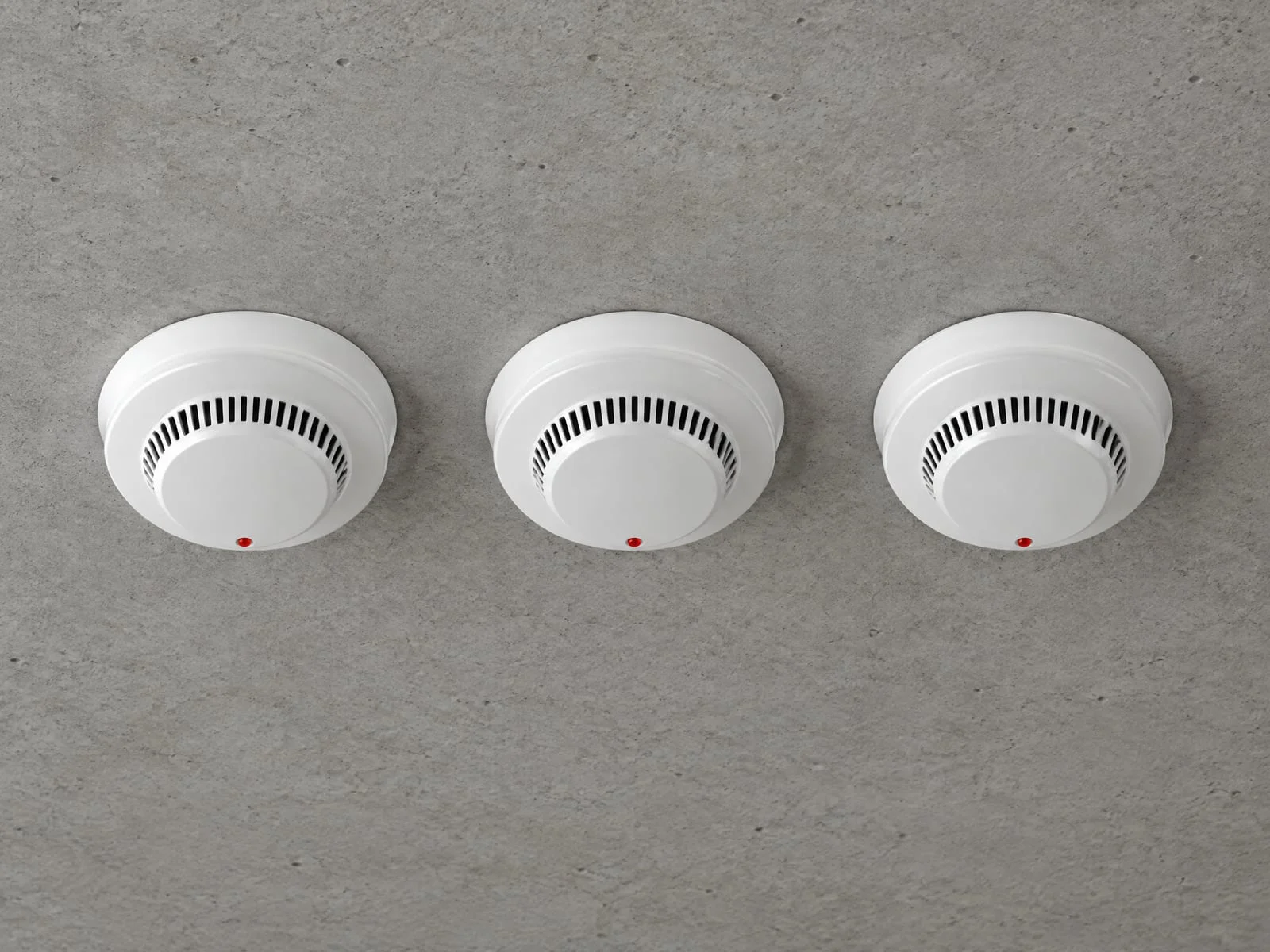
Smoke and heat detectors
Sense the fire, usually in two zones to avoid false discharge
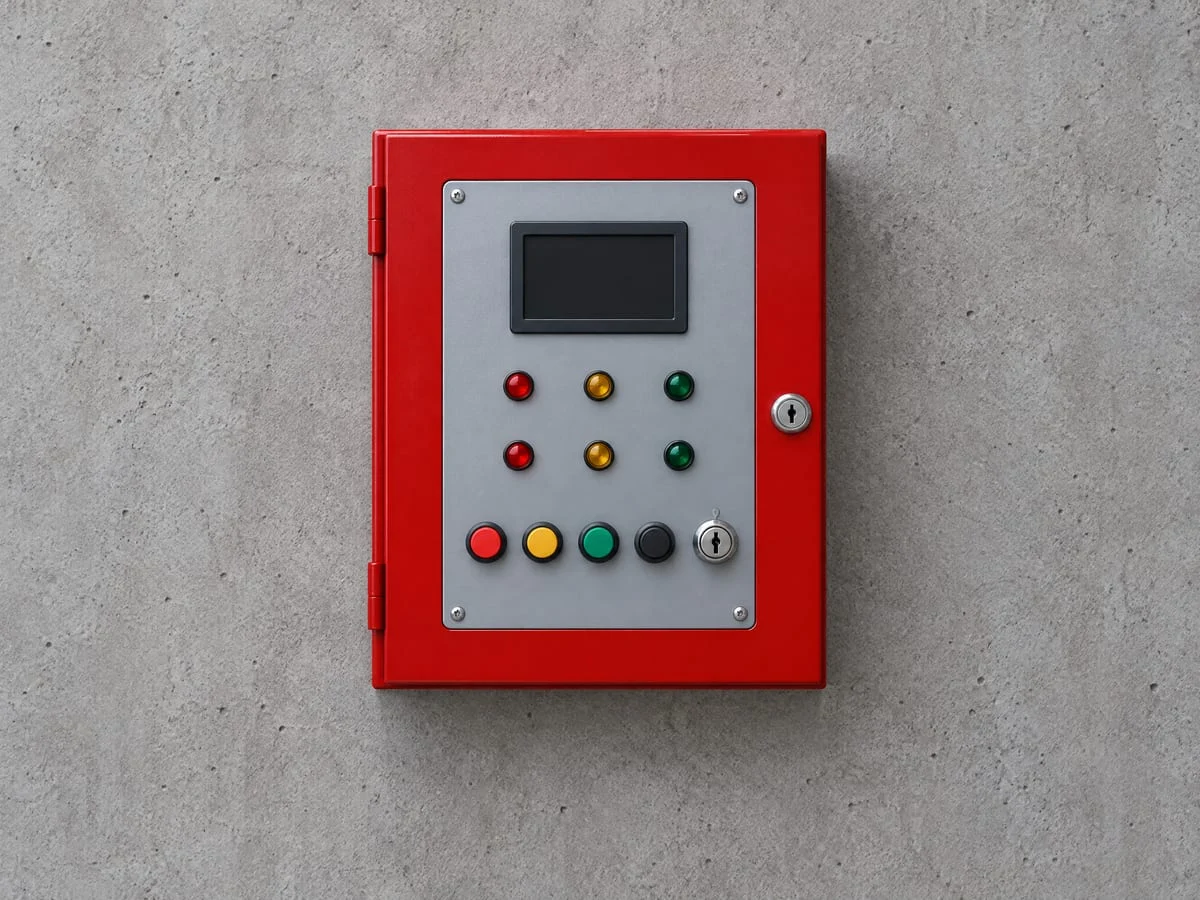
Releasing control panel
Sounds a warning, counts down, then releases the agent
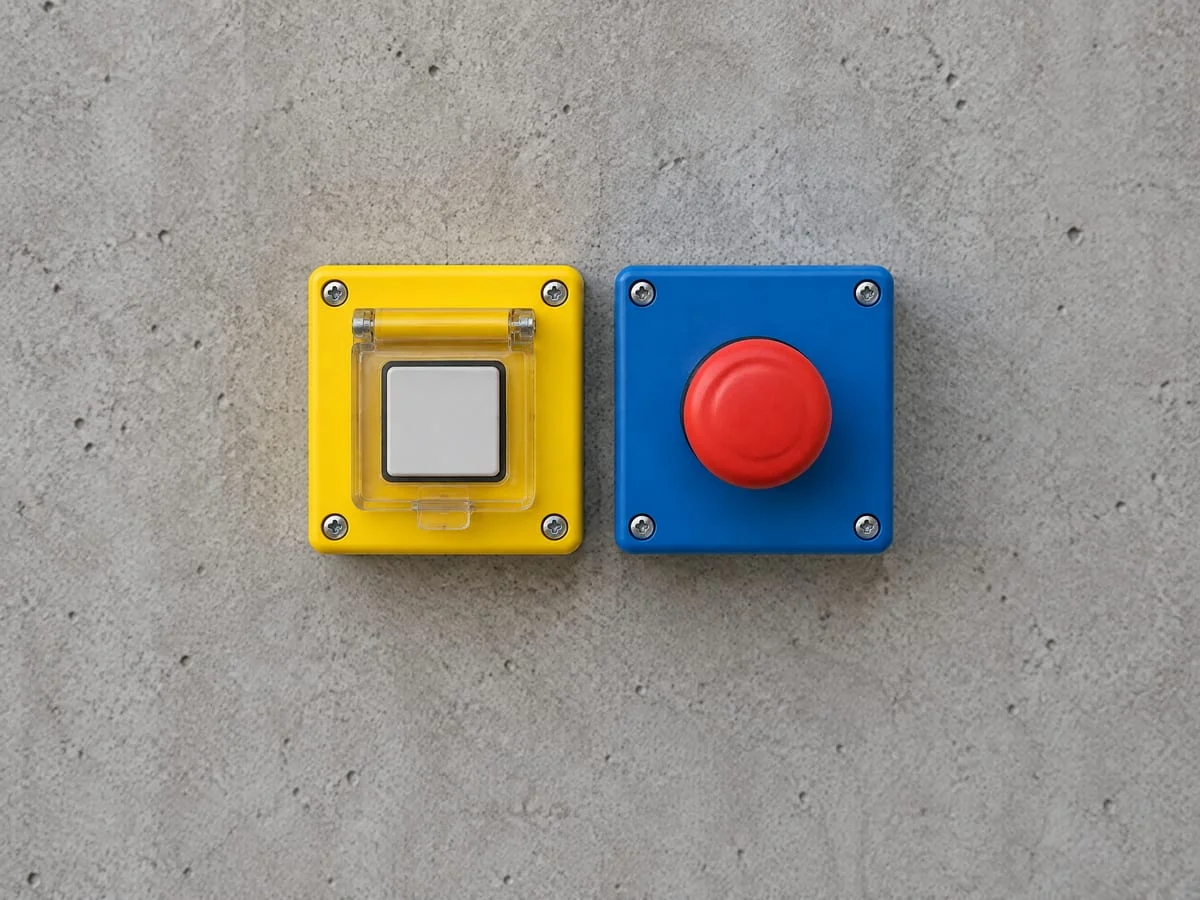
Manual release and abort switches
Let staff release the system or hold the release
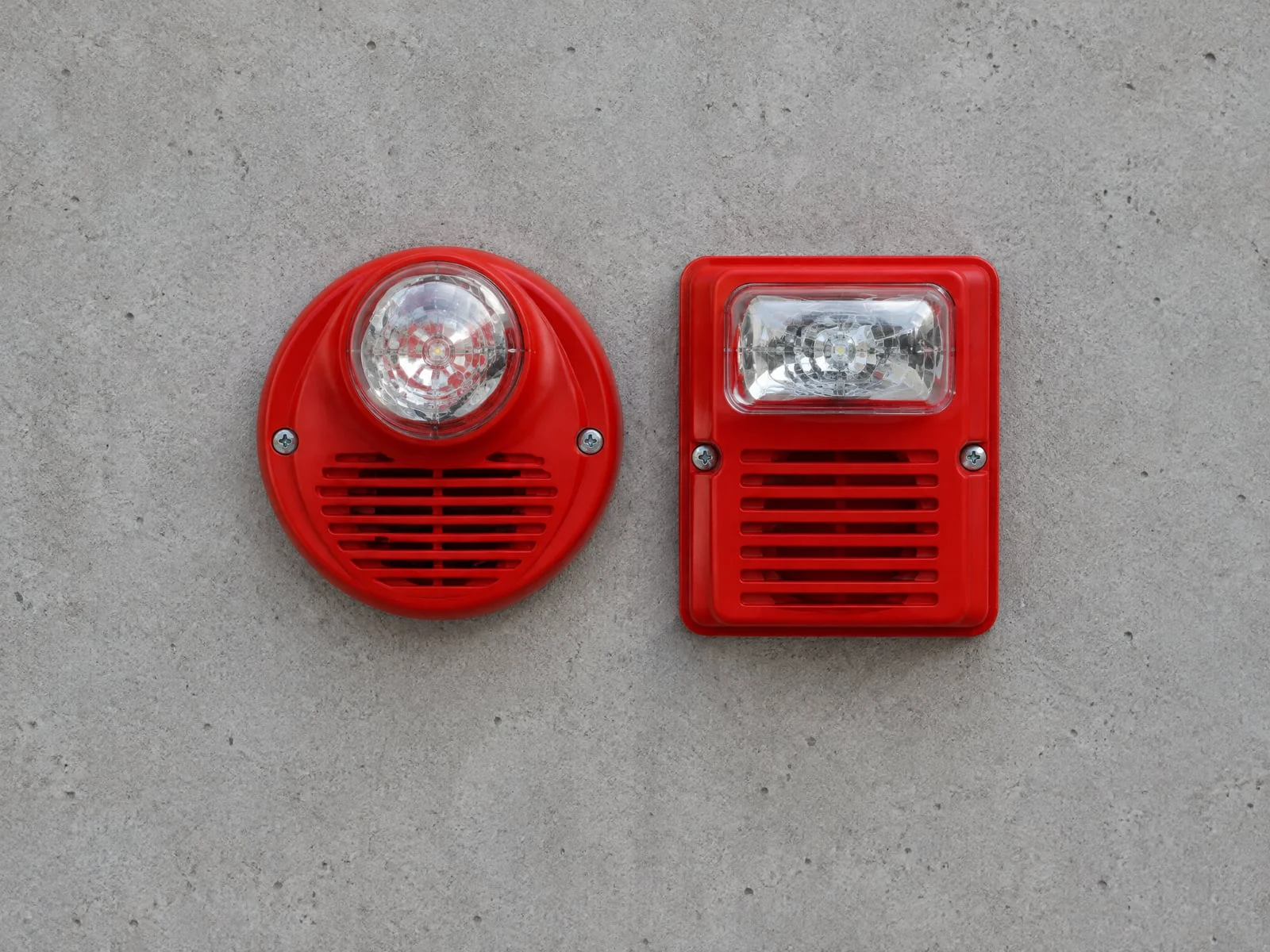
Hooters, strobes and warning signs
Warn people to leave the room before discharge
How we design each system
We size each system from the room's length, width and height, including the ceiling and floor voids, the type of fire risk, the design concentration and the design temperature. For every room we prepare a design sheet that shows the volume, number of nozzles, agent quantity and cylinder size. We design gas systems to NFPA 2001 and use Honeywell ECS FK-5-1-12 and FM-200 agents, with Lehavot UL 300 and INTIME systems for kitchens. We design each system to the NFPA standard that applies to the agent and to UL/FM requirements, and we can link it to your fire alarm system.
Our process
Free site survey
We measure the rooms or enclosures and study the risk and any existing system.
Design
Agent selection, agent quantity calculation, nozzle layout and drawings.
Supply and installation
Cylinders, pipework, nozzles, detectors and the releasing panel, installed by our own team.
Testing and commissioning
Detection and release circuits tested, room openings checked, and staff trained on the warning and abort sequence.
Form A
As a licensed agency, we issue Form A for the work, which you submit to the fire brigade.
AMC and Form B
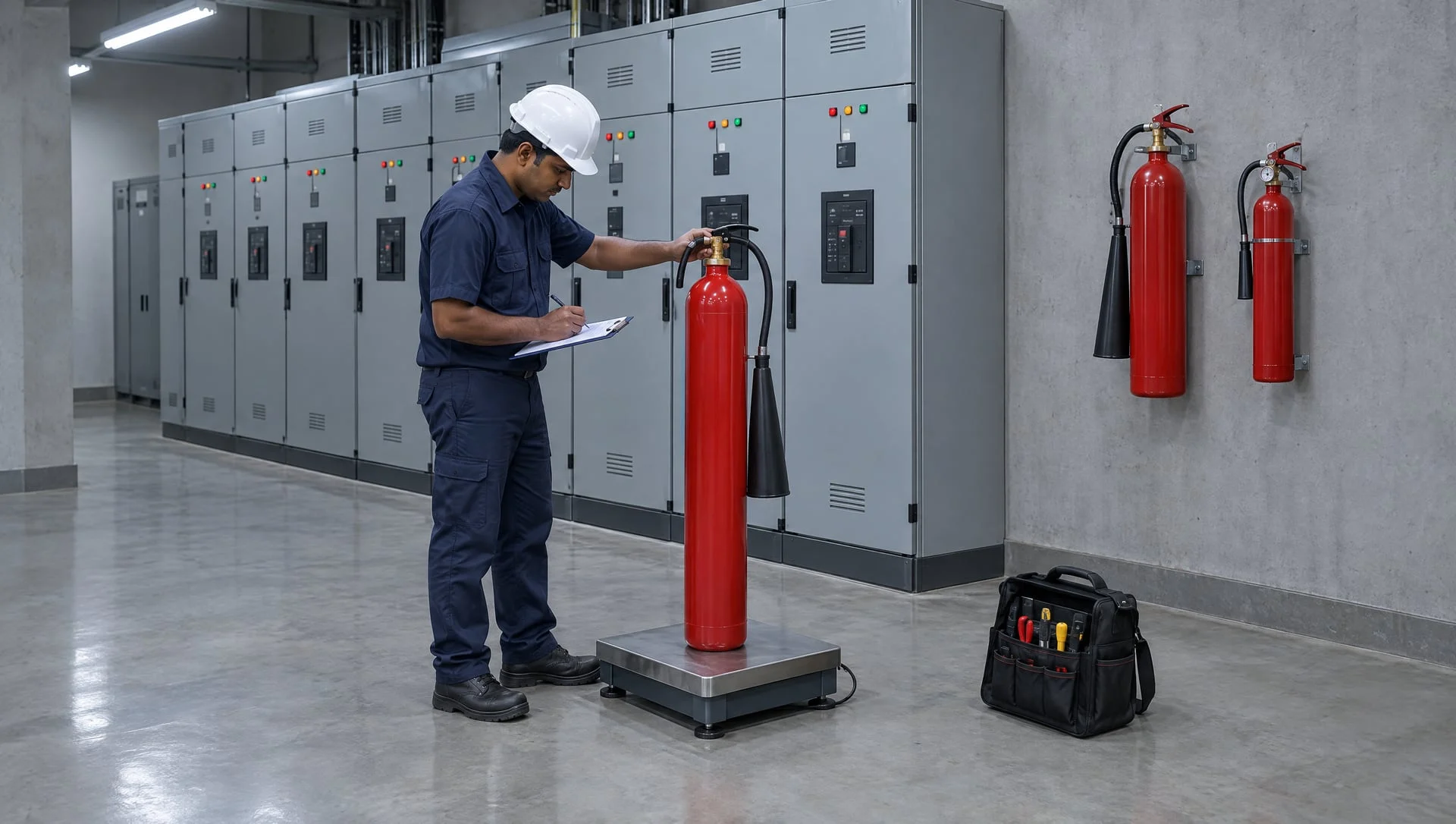
Periodic checks of cylinder pressure and weight, detectors and the panel, and Form B every January and July.
Maintenance
A suppression system has to hold its agent for years and release it only when needed. Under AMC we check cylinder pressure and agent weight, the detectors, releasing panel, actuators and warning devices, and we tell you when rooms have changed in a way that affects the design, such as new openings or a larger volume.
Why choose Cease Fire
Since 1992
1,500+ projects and the Rashtriya Nirman Ratna Award for Best Government Contractor (2002).
Licensed
Maharashtra Fire Services Licensed Agency (MFS/
LA/ ), issuing Form A and Form B.RF-93/ RD-95 Every major agent
FM-200, FK-5-1-12, inert gas, CO2, kitchen wet chemical and tube-based systems.
Room-by-room calculations
A design sheet for every protected room.
Fire and electrical together
Licensed electrical contractors, so panel and battery-room risks are understood.
Related products and services
Book a free site survey
Send us the room sizes and what the room contains, or book a visit. We will recommend the right agent and send a clear proposal with the agent calculation.
Frequently asked questions
What is a fire suppression system?
It is a fixed system that puts out a fire in a closed room or enclosure by releasing a gas or chemical agent instead of water. It is used where water would damage equipment, such as server rooms and electrical panels.
What is the difference between a suppression system and sprinklers?
Sprinklers spray water from heads that open in the heat of a fire. A suppression system floods the whole room or enclosure with a gas or chemical agent, leaving little or no water damage.
Which suppression system is best for a server room?
Clean agents such as FM-200 and FK-5-1-12, or an inert gas, are the usual choices because they leave no residue and are suitable for occupied rooms at the design concentration. We recommend one after measuring the room.
Is Novec 1230 still available?
3M has stopped making Novec 1230 fluid, but the same agent, FK-5-1-12, is still made by other manufacturers. We can supply and maintain FK-5-1-12 systems.
Can a CO2 suppression system be used in an occupied room?
No. CO2 at fire-extinguishing concentrations is dangerous to people, so it is used only in normally unoccupied areas, with warnings and a delay before release.
How is the gas quantity for a room calculated?
It is calculated from the room volume, including ceiling and floor voids, the fire risk, the design concentration and the design temperature. We prepare a design sheet for every room.
Do you install kitchen fire suppression systems?
Yes. We install wet chemical systems over kitchen hoods and appliances that also cut off the gas supply when they operate.
How often should a suppression system be serviced?
Most sites have quarterly checks and an annual service under AMC, including cylinder pressure and weight checks, plus Form B every January and July.
Question not answered here? Call our team, Monday to Saturday, 9 am to 7 pm.
Call +91 9920676281