
Fixed Temperature Heat Detector in Mumbai
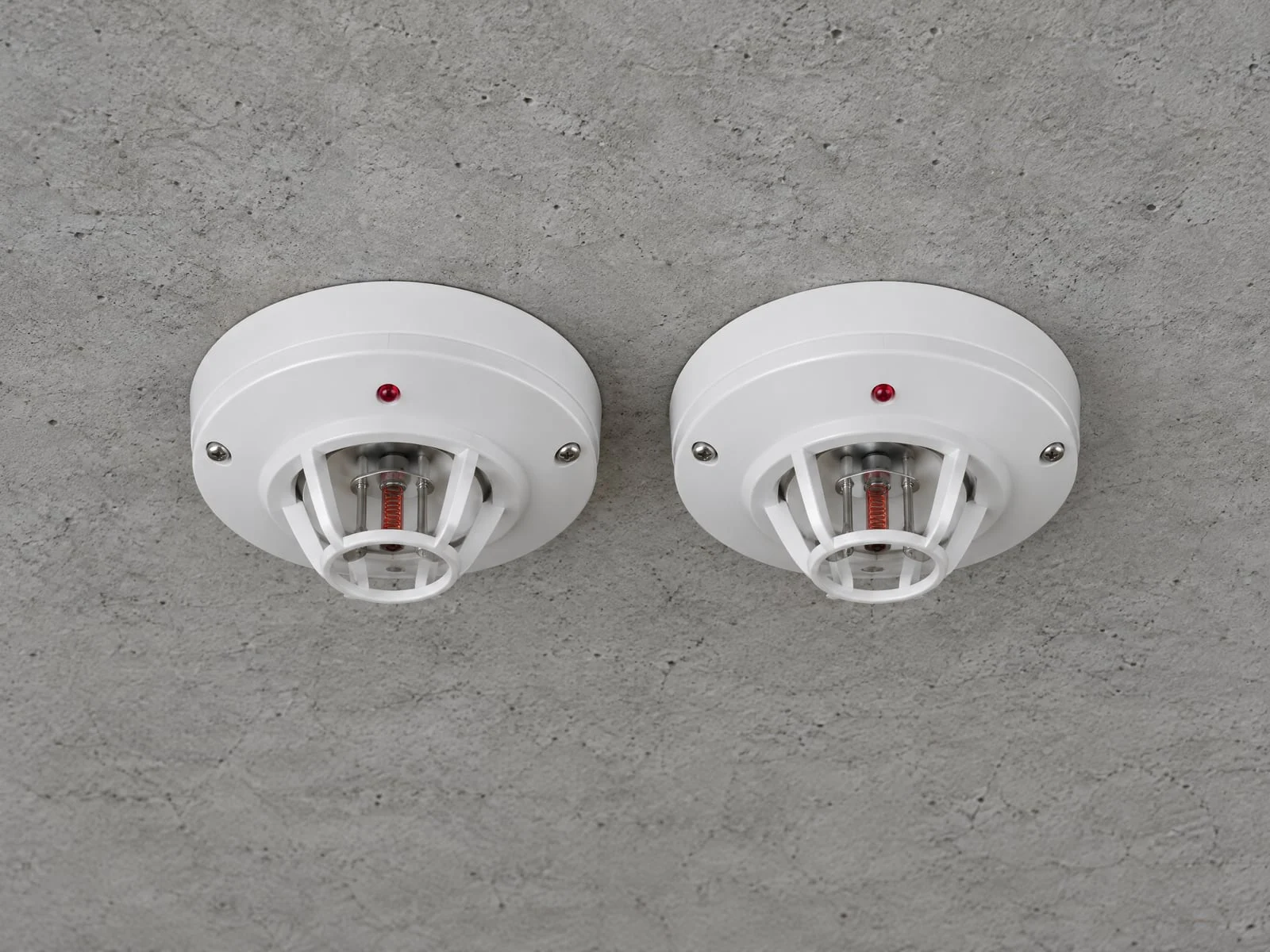
Cease Fire & Electrical Services LLP supplies, installs and maintains the fixed temperature heat detector for fire alarm systems in Mumbai, for kitchens, pantries, boiler rooms, DG set rooms and other areas where a smoke detector would give false alarms. It raises the alarm only when the air around it reaches a set temperature, commonly around 57 °C to 58 °C, so steam, dust and cooking fumes do not trigger it. We supply conventional and addressable versions to suit your panel and test each one before handover.
How it works and which rating to choose
A fixed temperature heat detector has a sensing element, such as a thermistor or a bimetal strip, that operates once it reaches its rated temperature. It does not react to how fast the temperature climbs, which is why it stays quiet in rooms that heat up quickly in normal use.
- Around 57 °C to 58 °C
- The most common rating, for rooms with normal temperatures
- Higher ratings, such as about 90 °C
- Hot rooms where normal temperatures come close to the standard rating
- Probe-type bimetal detector
- Above 80 °C, where electronic detectors cannot be used, such as generator or turbine enclosures, ovens and furnaces
Choose a rating comfortably above the highest normal temperature in the room, otherwise the detector may operate without a fire.
Fixed temperature or rate of rise
Operates when
Fixed temperature heat detectorThe air reaches a set temperature
Rate of rise heat detectorThe temperature climbs faster than a set rate
Rooms that heat up quickly in normal use
Fixed temperature heat detectorSuitable
Rate of rise heat detectorNot suitable
Rooms normally above about 43 °C
Fixed temperature heat detectorSuitable with the right rating
Rate of rise heat detectorNot suitable
Speed on a fast-growing fire
Fixed temperature heat detectorSlower
Rate of rise heat detectorFaster
Many detectors combine both elements in one head. Kitchens, boiler rooms and DG set rooms usually get a fixed temperature detector.
Where it is used
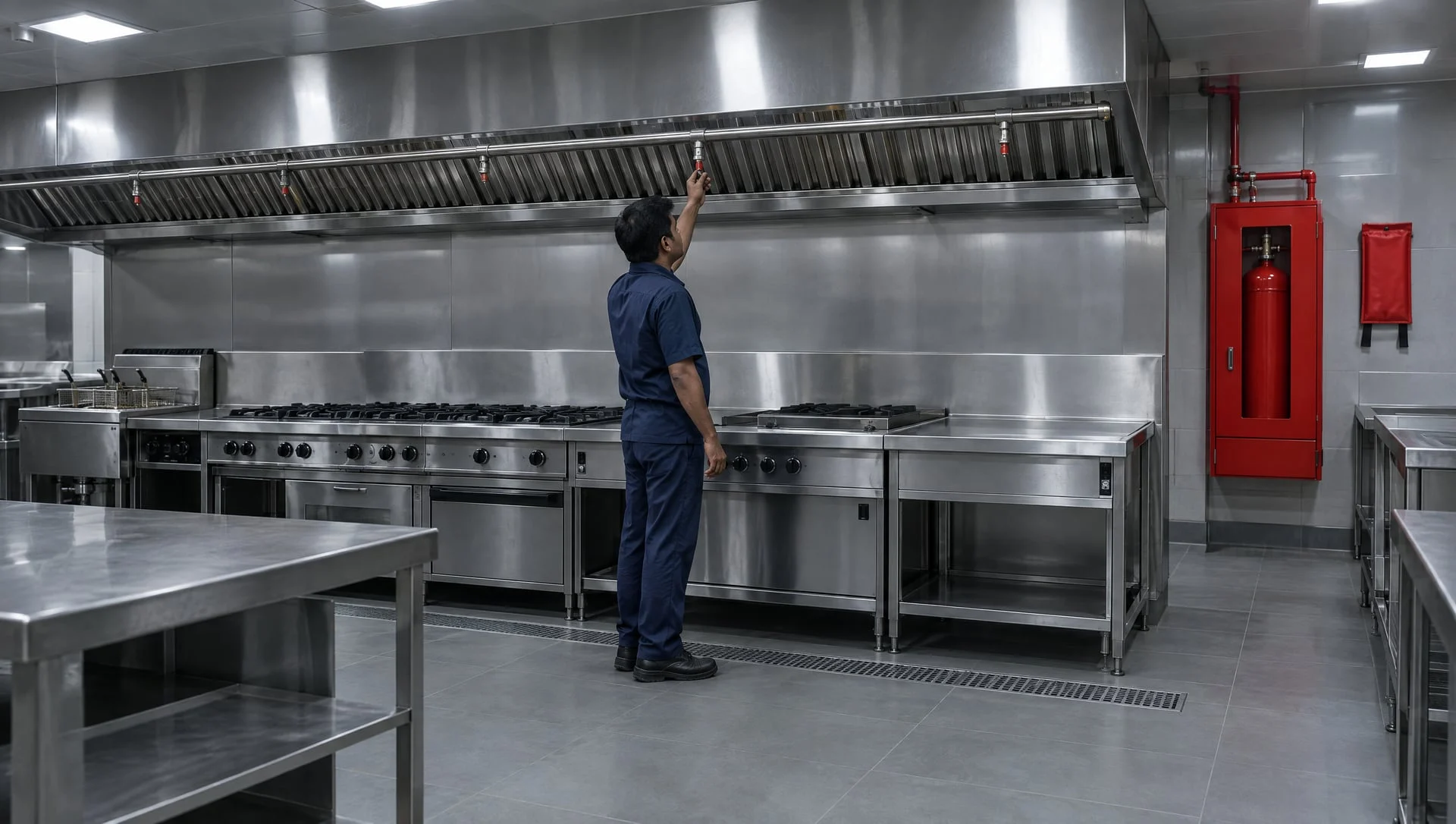
- Commercial and residential kitchens, pantries and canteens
- Boiler rooms, DG set rooms and other rooms with heat-producing equipment
- Garages, workshops, stores and battery rooms, where IS 2189 recommends heat or flame detection
- Dusty or steamy areas where a smoke detector would give false alarms
- IS 2189 does not recommend heat detectors for escape routes or high-value areas, where smoke detectors give much earlier warning.
Spacing and mounting rules to know
- Distance from any point to the nearest detector, flat ceiling up to 5 m high
- Up to 5.3 m
- Ceilings between 5 m and 7 m
- Up to 3.5 m
- Ceilings above 7 m
- Heat detectors not to be used
- Minimum number
- At least one heat detector per 50 m²
- Depth of the sensing element below the ceiling
- 25 mm to 150 mm
IS 2175 is the Indian product standard for heat sensitive fire detectors.
Supply, installation and servicing
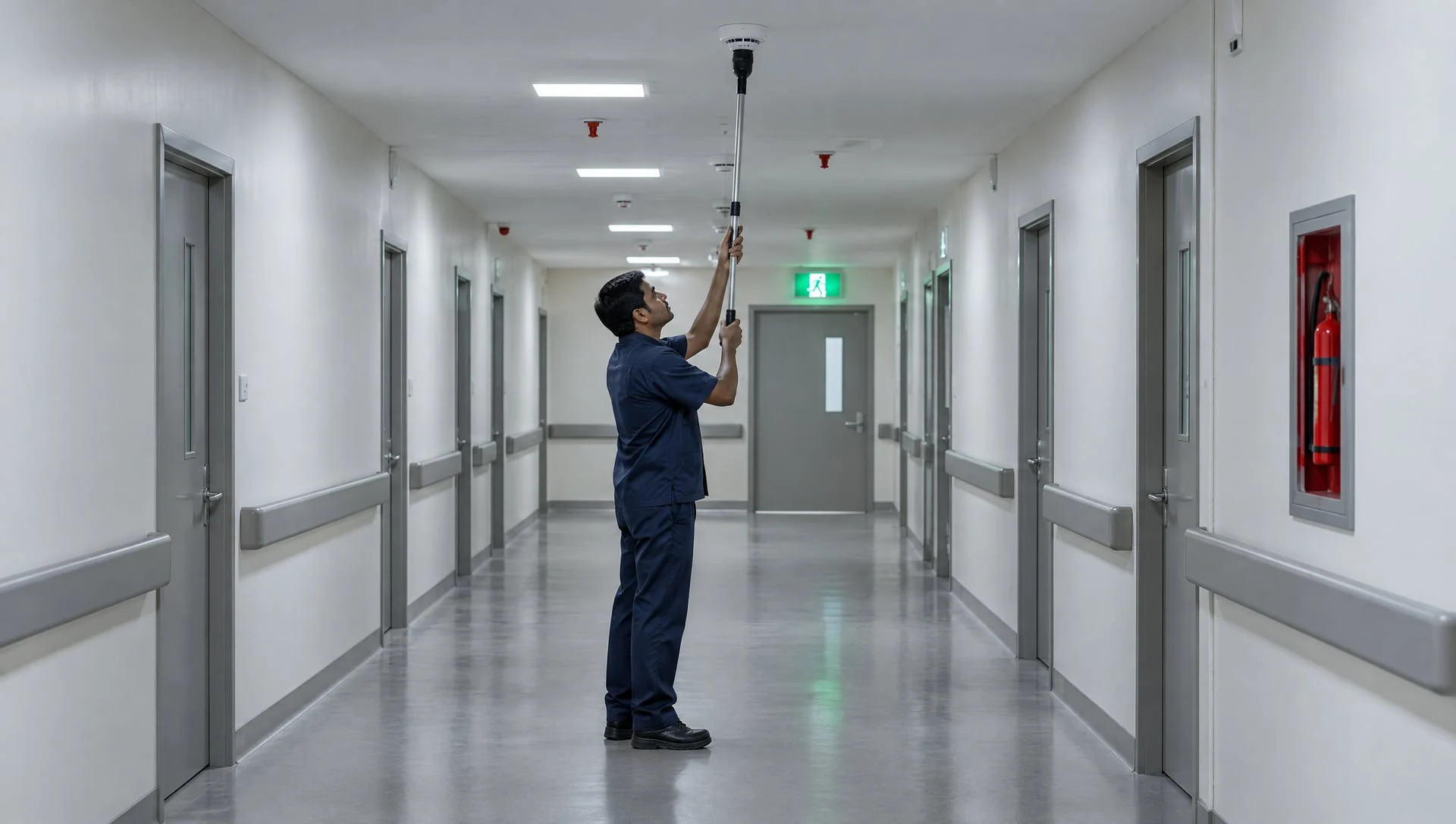
We supply detectors with their bases, fix and wire them to the approved layout, and test each one before handover. Resettable detectors are tested with a controlled heat source; non-resettable fixed temperature detectors are tested mechanically or electrically instead, as IS 2189 advises. Under our AMC, detectors are checked during quarterly visits and the annual service.
Detector faults and panel status can be reported through FireSense IoT monitoring, which supports the ACMS now required for covered buildings in Maharashtra. See the ACMS guide.
Why choose Cease Fire
Since 1992
A Maharashtra Fire Services Licensed Agency (MFS/
LA/ ) that designs, installs and maintains fire alarm systems.RF-93/ RD-95 Proven on detection work
Addressable fire alarm systems at 65 Adani Electricity substations in Mumbai.
Right part first time
We confirm the rating and panel compatibility before you order.

Request a quote
Tell us the number of detectors, the rooms they are for, and your panel make and model if you are adding or replacing detectors. We will confirm the right rating and send a quote.
Frequently asked questions
What is a fixed temperature heat detector?
It is a fire detector that operates when the air around it reaches a set temperature. It is used where smoke detectors would give false alarms, such as kitchens and boiler rooms.
At what temperature does a fixed heat detector activate?
The most common rating is around 57 °C to 58 °C. Higher ratings are used in hot rooms, and bimetal probe detectors are used above 80 °C.
What is the difference between a fixed temperature and a rate of rise heat detector?
A fixed temperature detector operates at a set temperature. A rate of rise detector operates when the temperature climbs quickly, so it responds faster but is not suitable for rooms that heat up quickly in normal use.
Which heat detector should I use in a kitchen?
A fixed temperature heat detector, with a rating well above the kitchen's normal temperature. Cooking can cause fast temperature rises, which may set off a rate of rise detector.
Can I use a heat detector instead of a smoke detector?
Only where a smoke detector would give false alarms. IS 2189 does not recommend heat detectors for escape routes, air-conditioned rooms or high-value areas, because smoke detectors warn much earlier.
How many heat detectors do I need?
IS 2189 allows up to 5.3 m from any point to the nearest detector under a flat ceiling up to 5 m high, with at least one detector per 50 m². We work out the number from your layout and ceiling height.
Can heat detector status be monitored remotely?
Yes. FireSense IoT monitoring reports fire alarm panel and detection status to the owner and to us, which supports the ACMS required for covered buildings in Maharashtra.
Question not answered here? Call our team, Monday to Saturday, 9 am to 7 pm.
Call +91 9920676281